An impromptu mega EV road trip


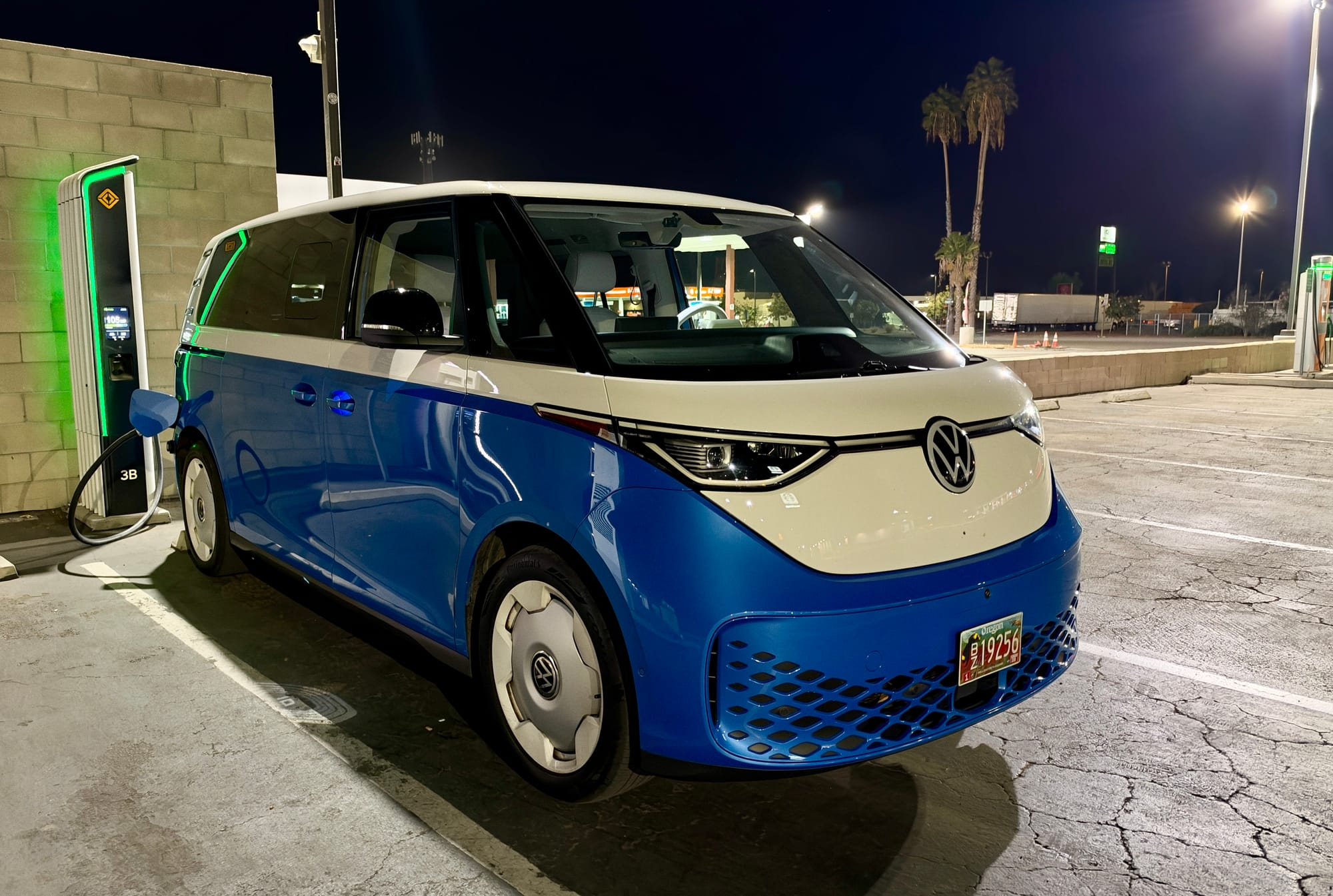
A family member needed to move from Seattle down to the LA area in a hurry last week, and the best car I had to move a whole apartment's worth of stuff safe and dry was our VW ID Buzz van. But it is an EV and I wondered how it might affect a long trip as I headed out for the first leg of my journey.
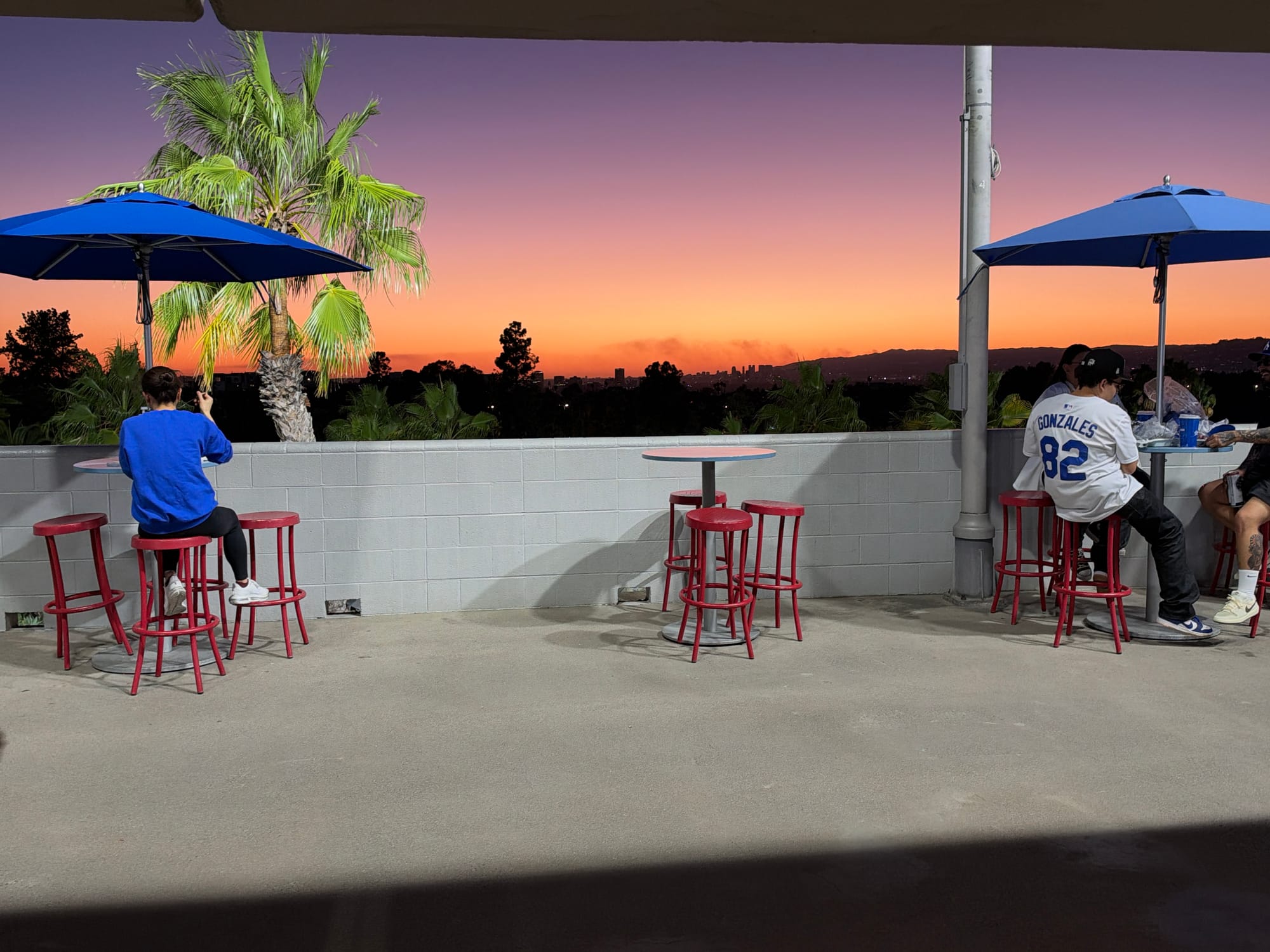
This would be my third EV road trip of over 1,000 miles (here's 1 & 2). This time, I drove around 2,600 miles, from Portland up to Seattle and back, then down to Ventura, Los Angeles, and around Pasadena before heading back to Oregon. I did it all from Monday to Friday of this week, and even had time to attend a Dodger game in LA.
The surprising cost of EV vs gasoline
In total, I charged the car 19 times during the trip using paid, level 3 chargers from Rivian, Tesla and Electrify America. Each stop, I spent about 20 minutes charging and it came to $516.45 total for the entire trip.
That may seem expensive, but if you compare it to a gas-powered minivan on a 2,600 mile trip getting 20mpg, with fuel being around $5.50/gallon currently, that same road trip would cost $715. If the van got 25mpg, the fuel costs would still exceed the EV costs at $572).
MVP of the trip: A Better Route Planner
When I first picked up the VW Buzz, I checked EV subreddits looking for good trip planning software. In the past, I would just use PlugShare or the car's built-in nav with a lot of guessing personally about how far I should go between stops (which can be quite stressful).
Everyone on reddit says ABRP (A Better Route Planner) is the best EV route planning app so I downloaded it and paid for a pro account and tried it on my first trip back to Oregon from Texas last December. I found it was not as good as the built-in VW nav because it had no idea what the live battery status was. It would wildly overestimate how far I could get between stops, and frequently gave bad advice on where to stop for a charge. It stressed me out and I nearly ran the car down to 0%, so I stopped using it.
For this trip, I wanted to give the app another try because it was tedious to use half a dozen different map and charger apps to figure out where I should stop while headed down to LA. On the plus side, I learned while researching ABRP that it could be greatly improved with the addition of a bluetooth OBD port connector, which lets the car talk to my phone, giving the app the ability to always know exactly how much battery I had left in real-time.
I bought a OBDLink CX halfway through my trip, snapped it into the Buzz, connected my phone, and suddenly ABRP really was the best app I've ever used for EV road trips.
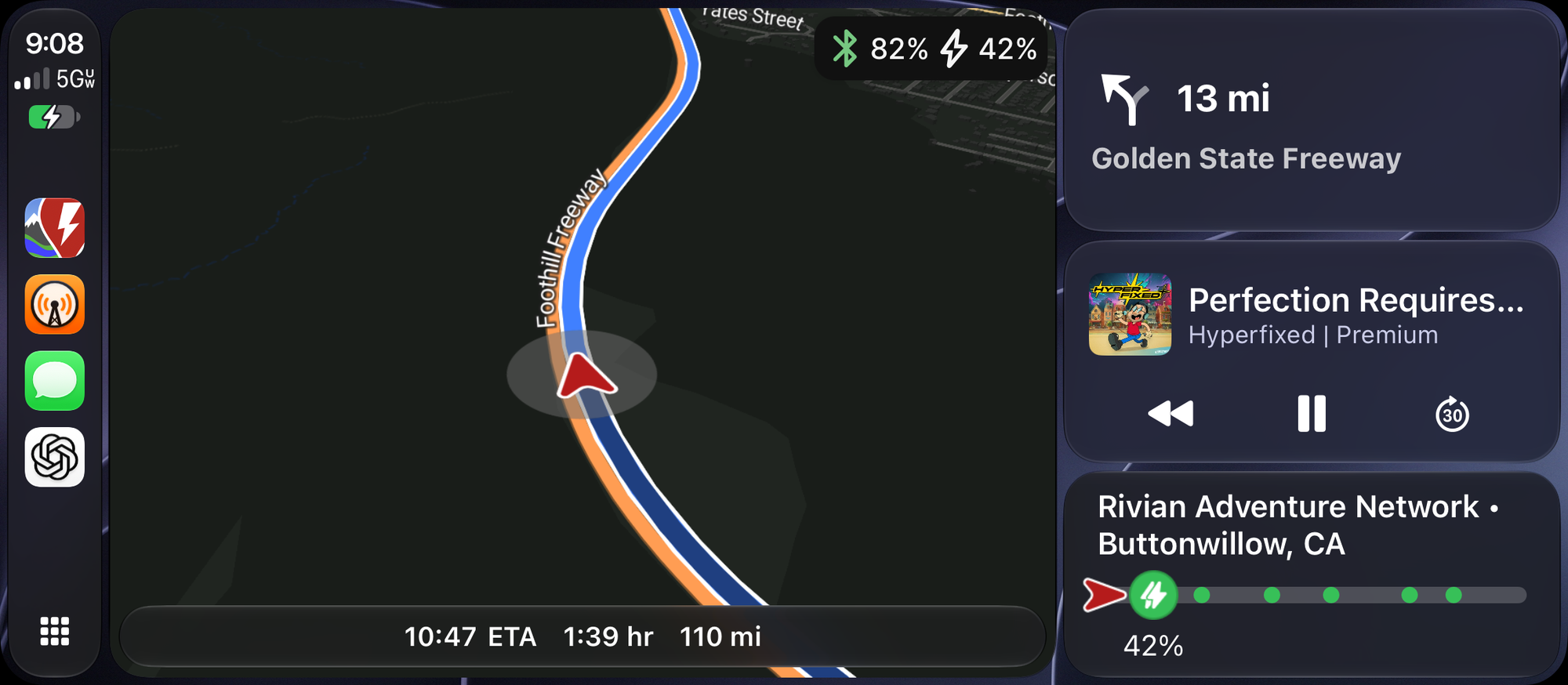
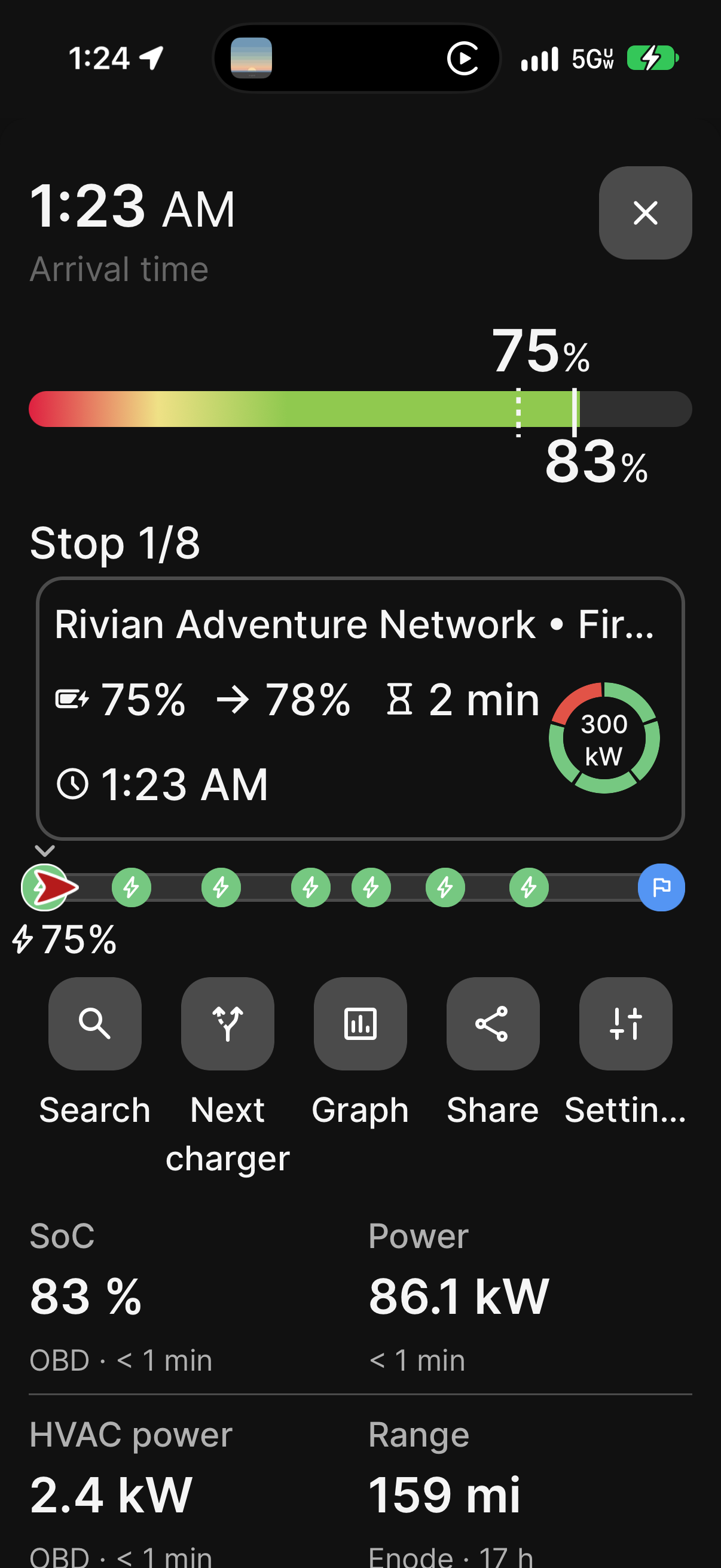
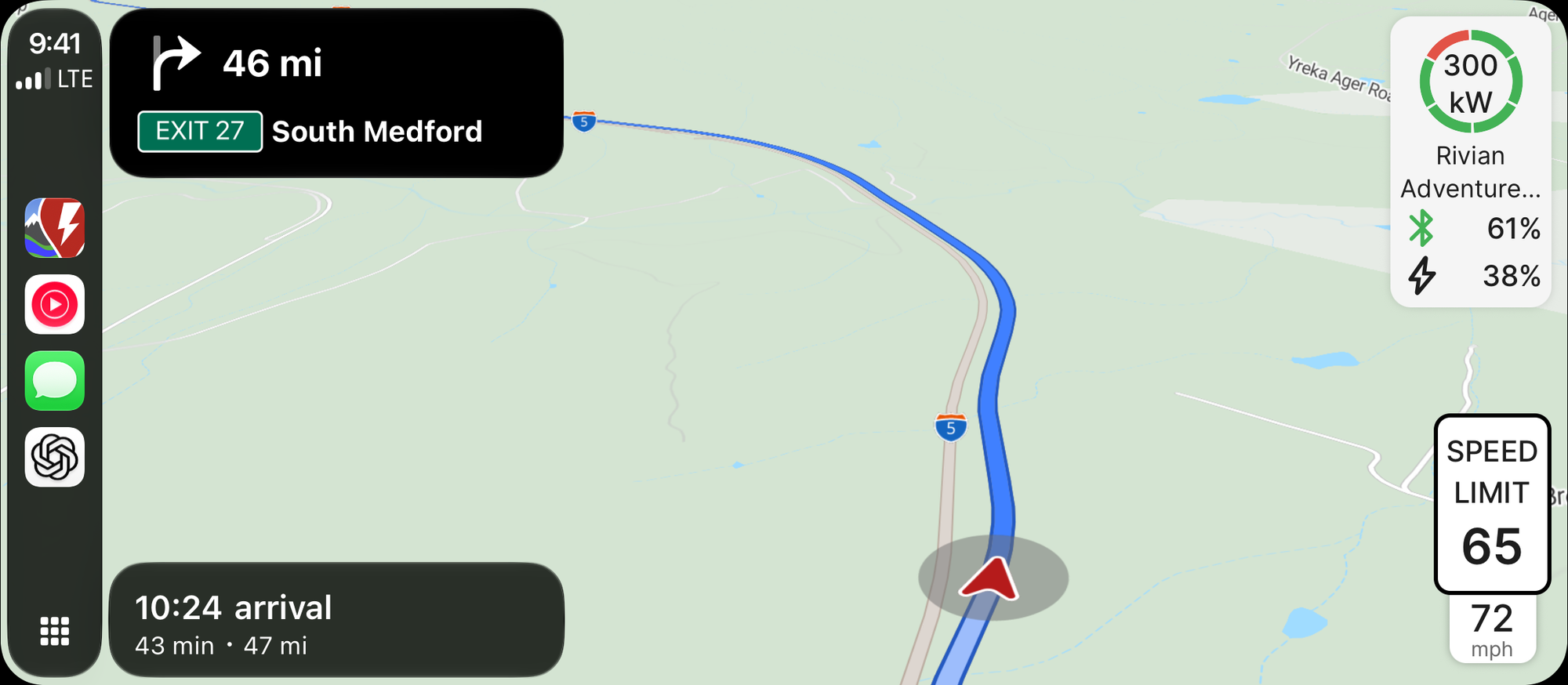
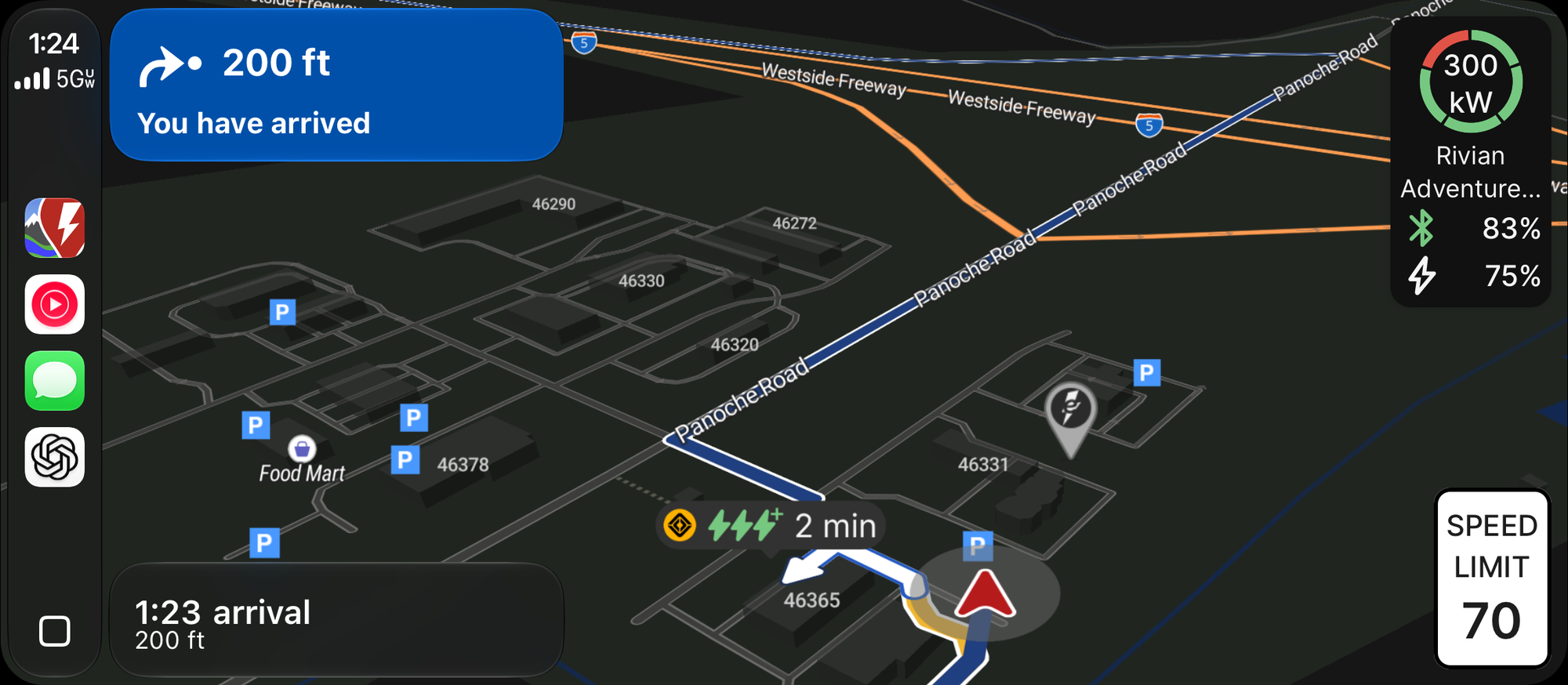
Screenshots of ABRP, the first is the compact view showing all the stops ahead, the second is how the "trip dashboard" looks on your phone, then a daytime shot of the full app in CarPlay
The data was live and tracked with the vehicle perfectly. Estimates of how much battery would be left when I got to chargers was accurate and always within a few percentage points of where it really ended up. The app accounted for elevation changes, wind speeds and wind directions in its estimates but also tweaked predictions based on how I was driving.
It was honestly a million times better than the built-in nav in the car itself. I customized it to say I preferred >200kW Rivian Network chargers, then Electrify America chargers in a pinch, and Tesla if there were no other high speed options (I dislike giving Elon Musk money and avoid doing it as much as possible). The app immediately conjured up a long list of fast chargers in good locations for the whole 950 miles home (and not a single Tesla charger was needed). I loved how it tells you how crowded a charger is at a glance, by showing you how many chargers were available and how many were taken (showing up in red) in the upper right of the map view.
ABRP natively works with some EV car batteries but if you can connect the OBD port to it via Bluetooth, you will get a perfect route planning app in any EV you drive. At this point I don’t need to use the car's built-in nav again since this is miles better. It's as good as Tesla's built-in software on their cars, which was always the gold standard for planning out long EV road trips.
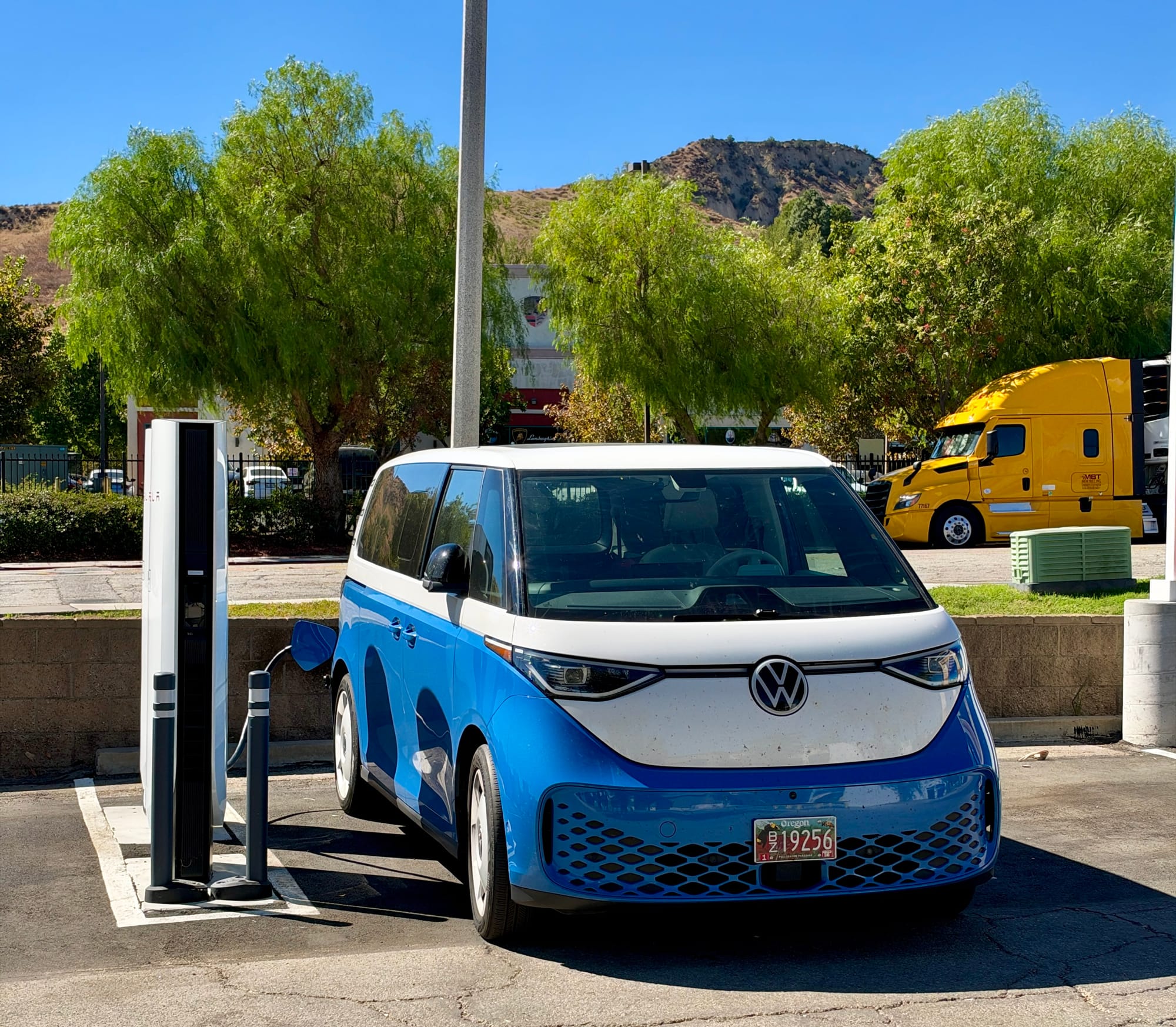
On my trip home, ABRP found fast empty Rivian chargers at almost every stop, which seemed cheaper than others. A small bummer was that Electrify America doesn't have an open API for their chargers, so ABRP couldn't tell me how crowded those charge stops were ahead of time. But given they usually only had 4 chargers total, when I did check their status in the Electrify America app, every few minutes the stops would be either totally busy or empty as people would come and go so often, making that information less useful.
In general, I really liked the Rivian and Tesla chargers because they were always close to a grocery store and several food options. There was always a place to use the restroom then get water and snacks. Electrify America's chargers were most often at a Walmart or Target, where using restrooms or getting food was a bit tougher.
Dodger season ends with a sputter and a whimper
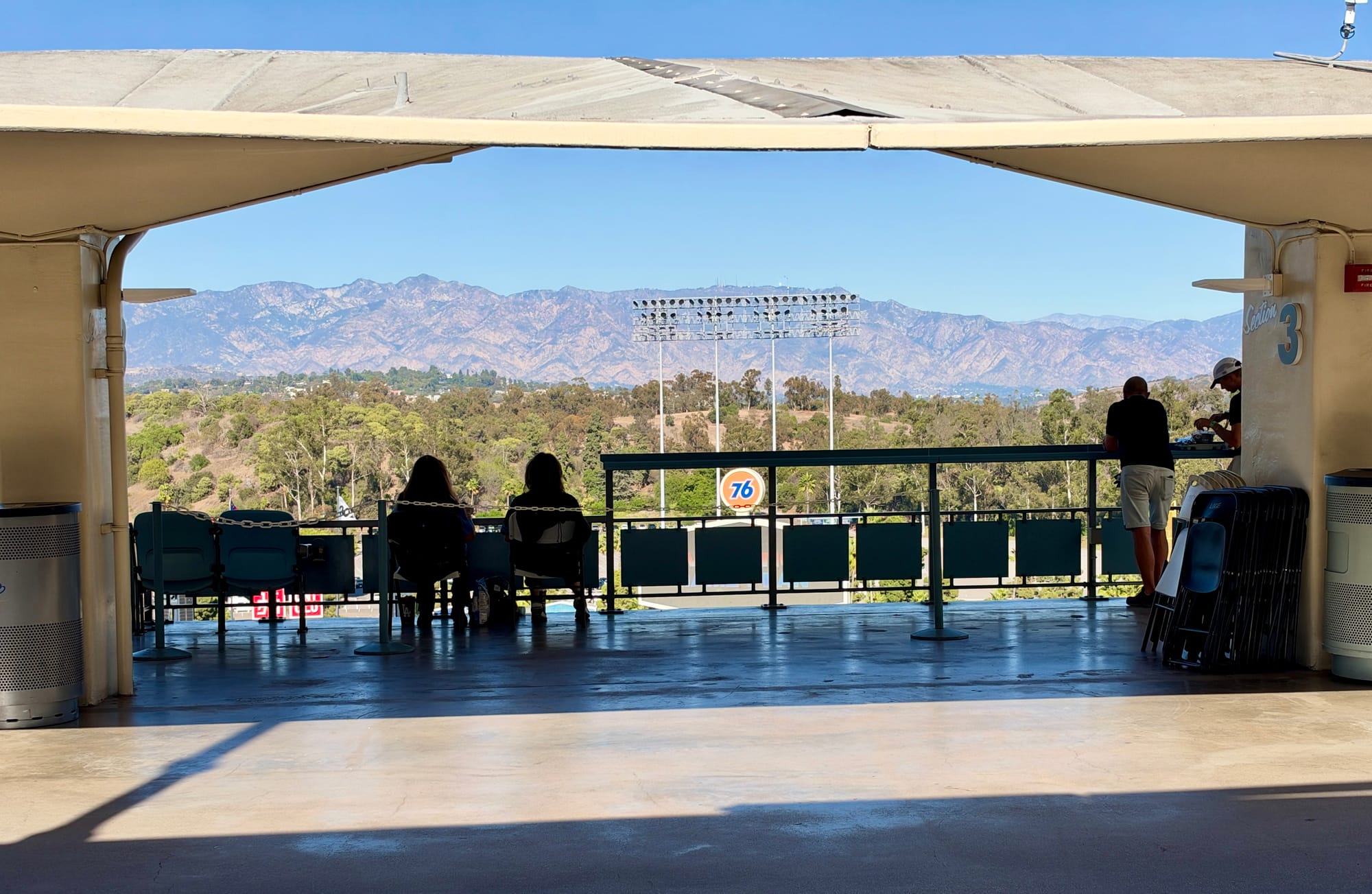
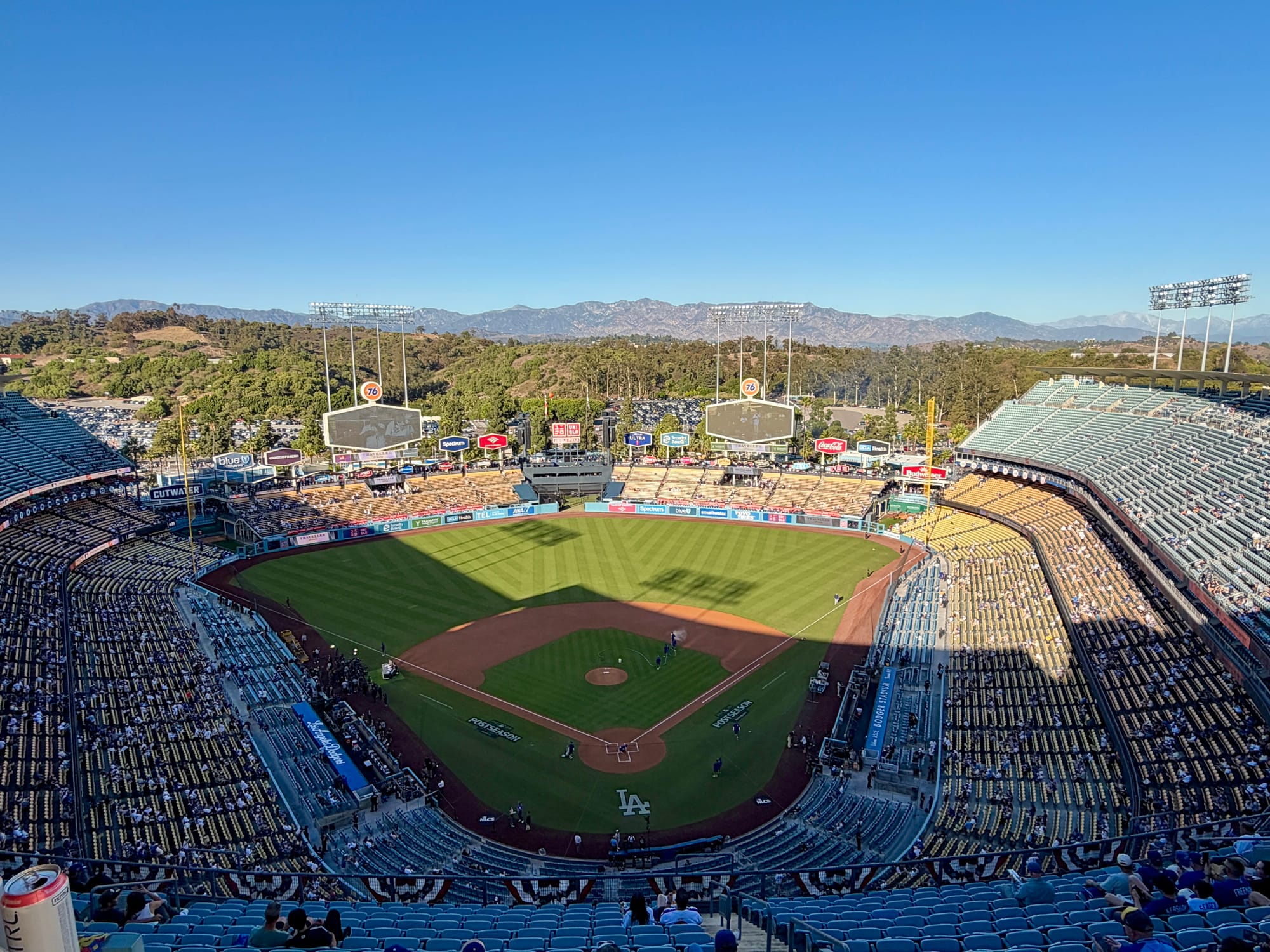
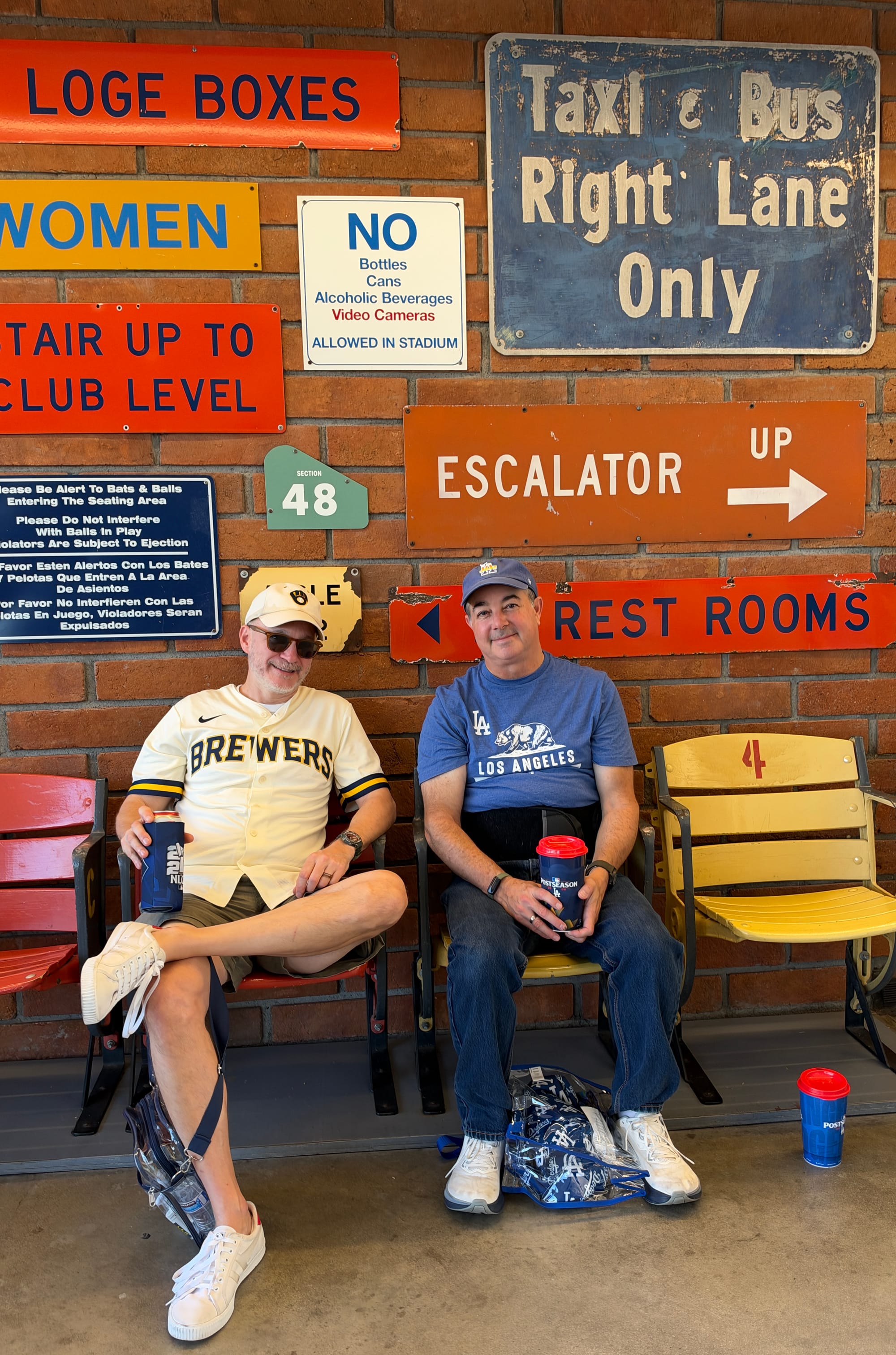





The Dodgers haven't been playing well in the postseason, as most of the team seemed exhausted, injured, or both. I didn't have high hopes for another World Series and turns out if you check SeatGeek the day before a game, ticket prices drop significantly, so Greg and Michael and I all got to attend what turned out to be the final Dodger game of the season from the cheap seats.
The Brewers played like the Dodgers of the 2024 season, steamrolling opponents with singles and doubles in late innings and they've looked unstoppable all year long. I hope they take the whole thing.
Final EV roadtrip thoughts
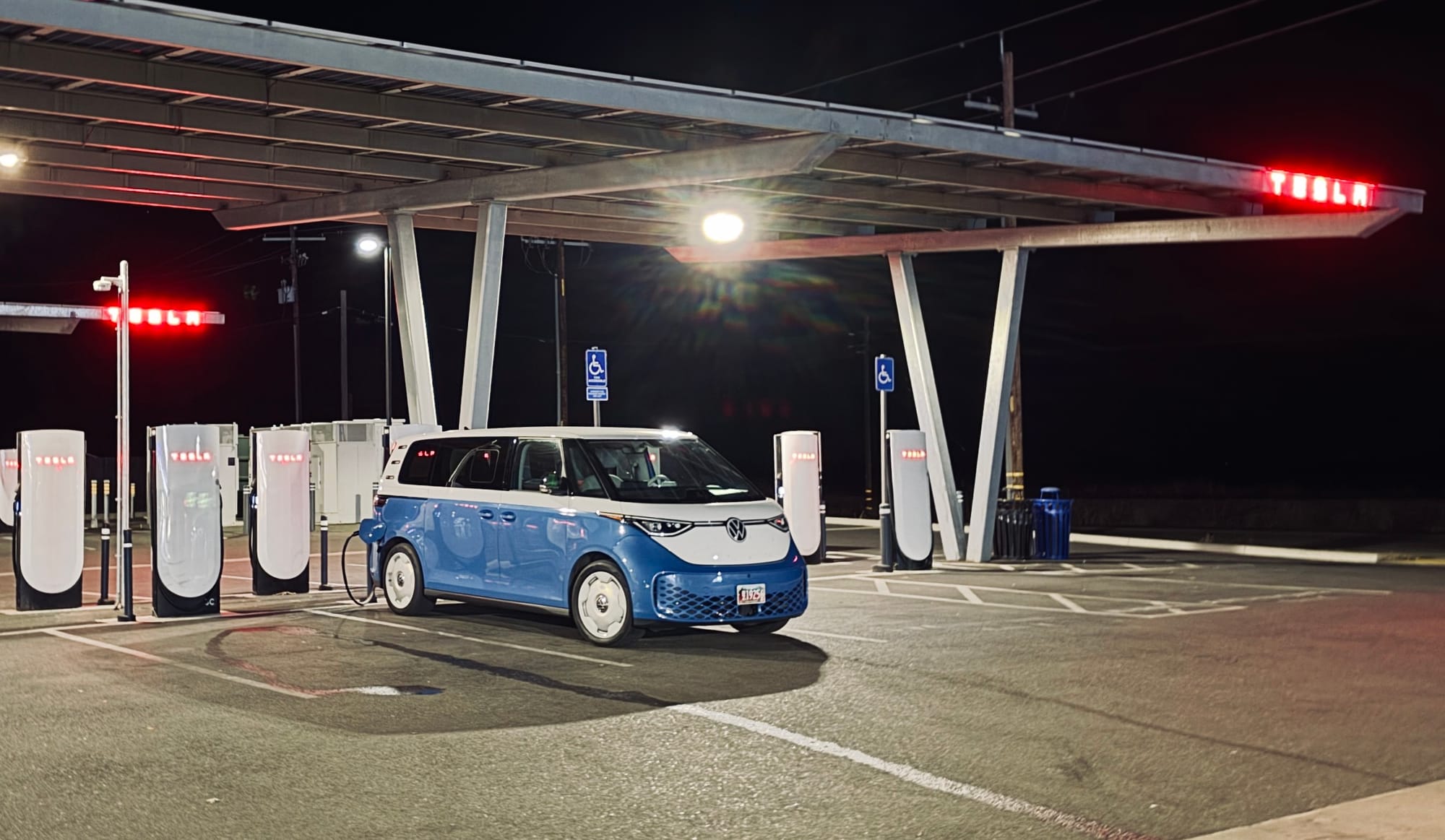
At the start of my trip, I was a little worried about taking a EV on such a long trip without prior planning, but it really turned out just fine. And given how good the ABRP app is when connected to an EV, I got perfect suggestions for stops every time and the car never got below 20% charge (the setting I picked in the app as my minimum) no matter how remote of an area I was passing through. Range anxiety is basically gone now that I have ABRP.
In general, EV road trips are fun if you're not trying to get somewhere as quick as possible. I enjoyed stopping every 150 miles or so to recharge the car and take a break for 15-20 minutes. On the trip down I always got snacks and water, on the trip back I slept each time in the back of the van. I've driven to Southern California from Oregon many times and the trip down usually takes about 14 hours, but this time that segment took about 16 hours with the extra stops.
Overall, I had a great trip. I got to help out a family member, got to push the limits of what an EV can do on a road trip, and had a good time doing it while seeing friends and family. Road trips are usually the biggest sticking point when people consider getting an EV but I can tell you that after three long trips, an EV is perfectly fine for distant travels in the US, even when you don’t extensively plan them ahead of time.