A perfect mix of 3D printing and woodworking

A couple weeks ago I stumbled upon this woodworking guy's YouTube channel that is generally pretty silly, but he came up with a clever system to use 3D printing in a woodshop, the likes of which I've never seen before.
Building a crosscut sled for your table saw is such a time-honored tradition that I've already built two of them. A crosscut sled lets you do things you'd normally only do on a miter saw because they're too dangerous or sketchy on a table saw. You also get way more accuracy making these cuts on your table saw versus most miter saws.
But the problem with crosscut sleds is they deteriorate over time as you make various angled cuts or repeat cuts or throw in wide dado blades. As your sled's wood base and fences get increasingly cut up, depending on how often you use the sled, you might need to build a new one every few months.
So I was intrigued when I saw this guy's setup where you build a sled with pre-determined slots that 3D prints fit perfectly into, so if you tear any of them up, you can just print out a new plate and screw it in to start fresh.
Now, the guy behind it sells the plans for a big sled and a little one, along with all the 3D files for $99 and that's pretty steep but also kind of normal in the woodworking community, where I frequently spend $20 to $100 for detailed build plans for other projects. I was curious about how this system worked in practice and ponied up the dough and went ahead and built both sleds last week and I have to say I already love this whole setup.
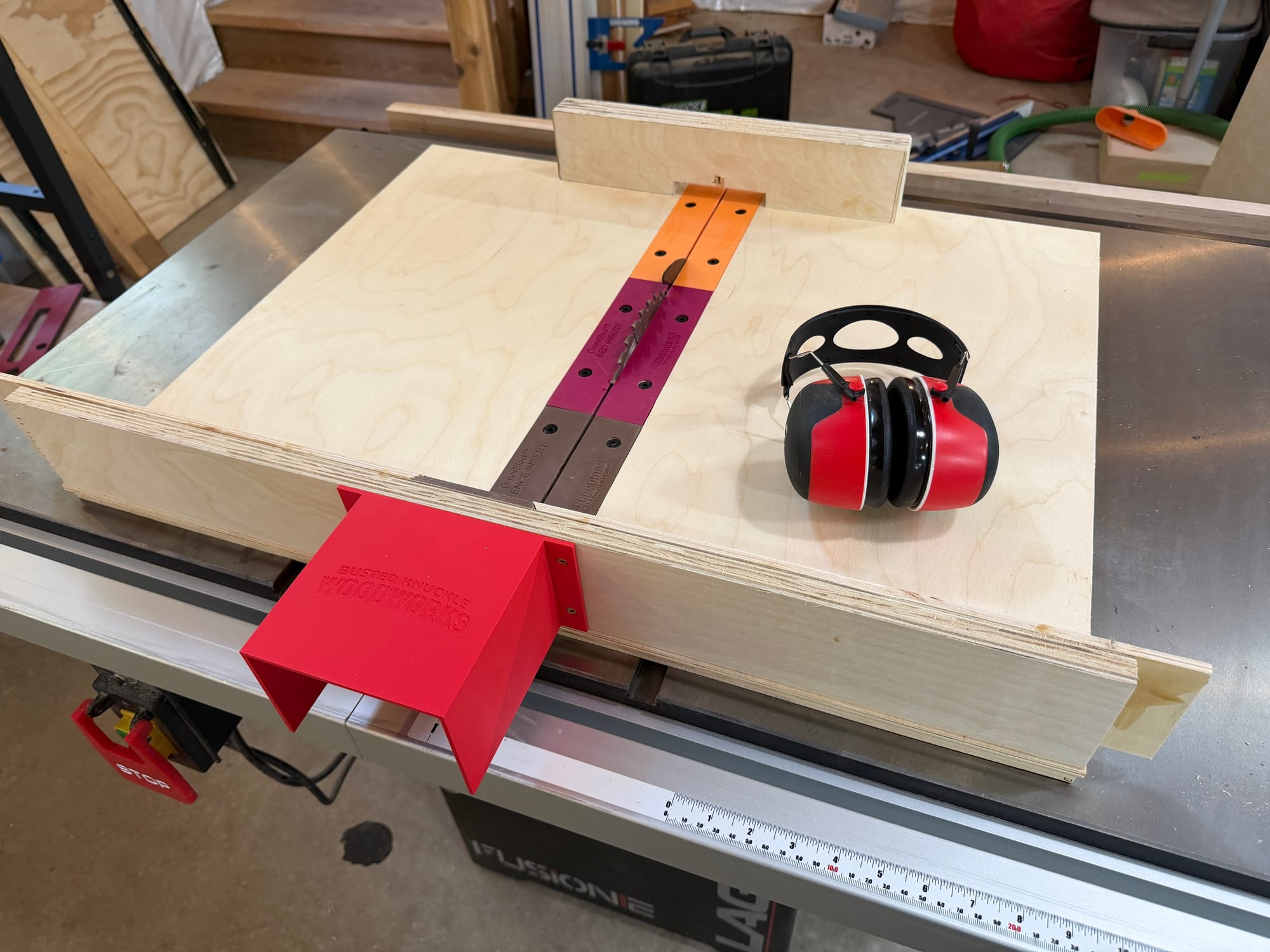
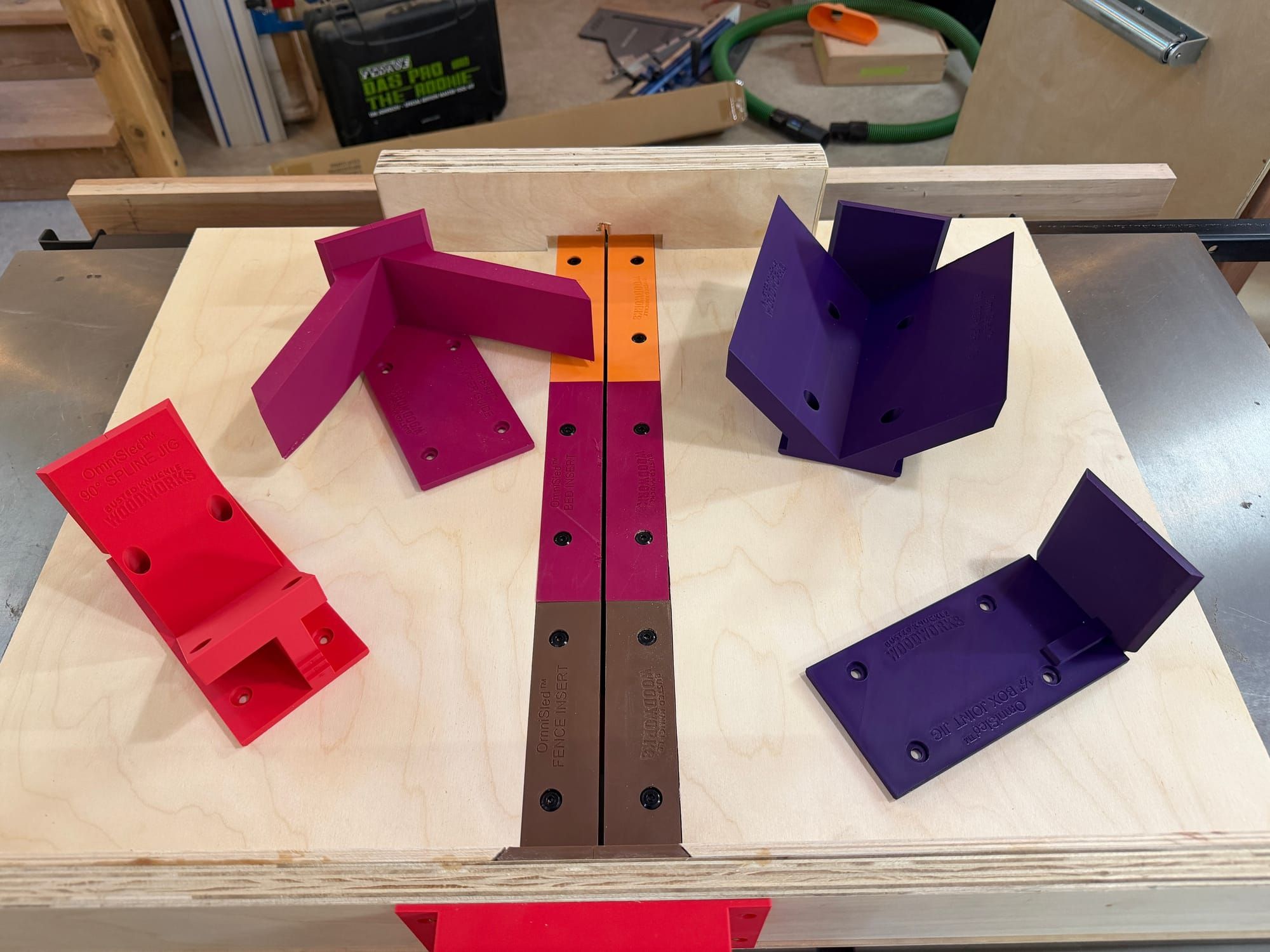
Here's my basic big sled setup and I followed the plans for reusable cap screws so I can replace any segment of the sled with a simple allen wrench. I printed their blade guard on the back to keep my hands safe too.
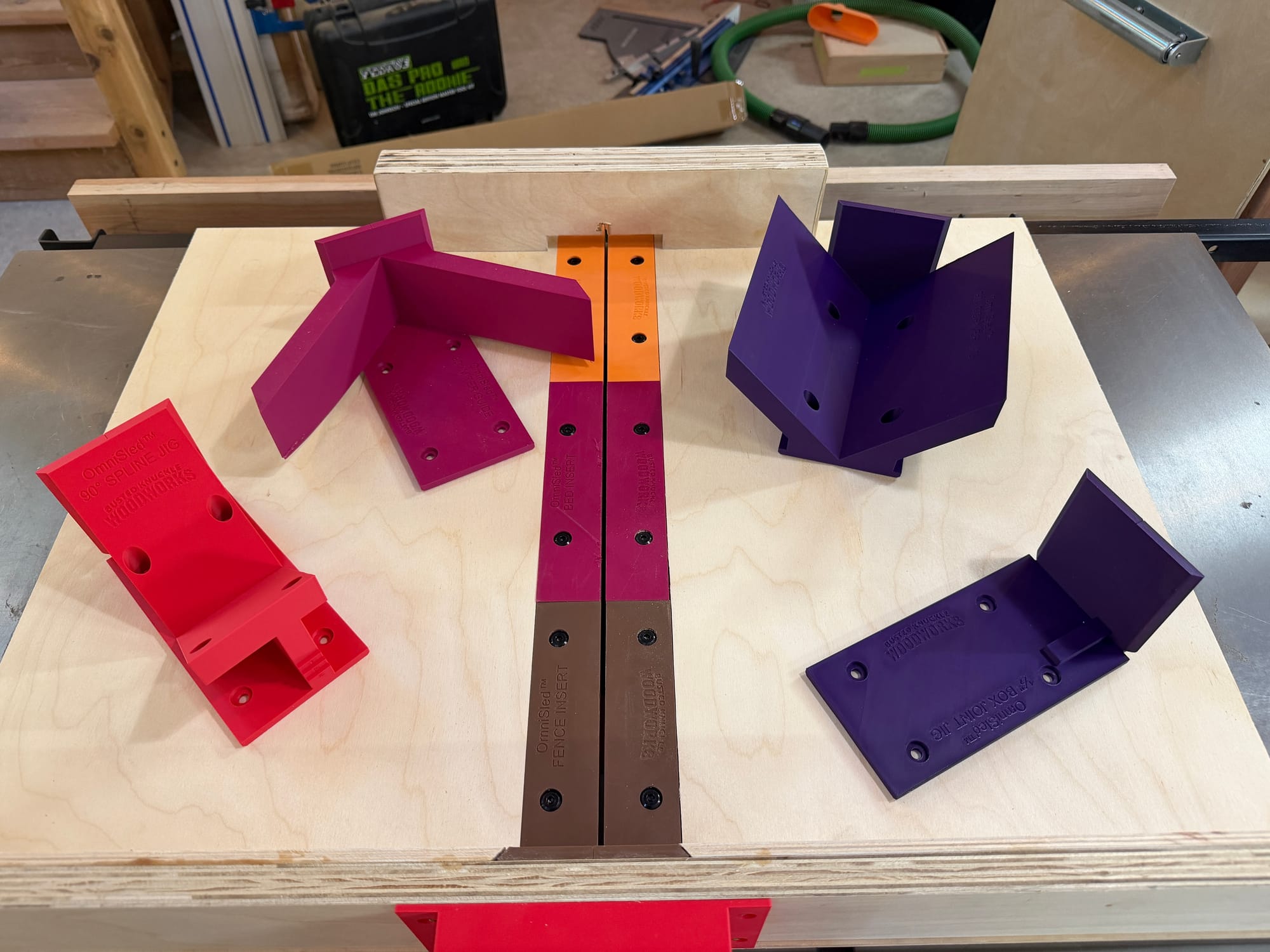
Here are some extra attachments I printed, from left to right on the sled:
- A spline cutting jig to add strength to boxes
- A corner jig for making picture frames
- A miter jig for 45º cuts
- A 1/2" box jig for making finger joints
- not pictured: multiple copies of the three main panels for different blades
The great thing about the miter and corner jigs is the 3D print is exactly 90º on both, so if you cut one piece of wood on one side and then your joining piece on the other side, they will always match up perfectly, because math (even if your blade was off from perfectly straight the two cuts would always add to 90º).
I can't wait to try out the box jig as I've made finger joints before using a router table and it was a pain. The spline jig is also pretty cool in that it has measurements on the front for how high to set your blade for the exact thickness of your material so you don't accidentally saw through a box joint.
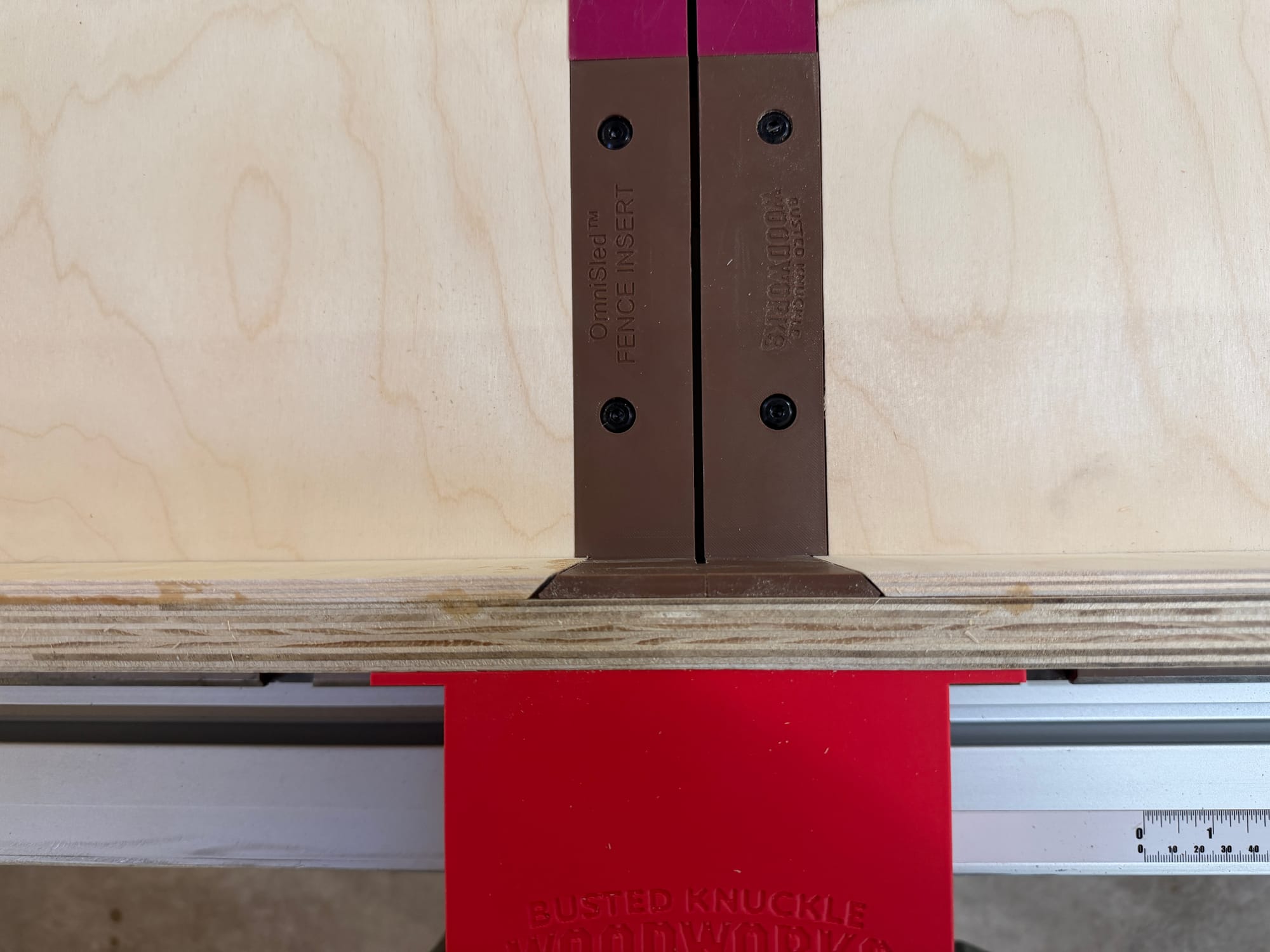
The design of the whole system is really interesting, the sleds were easy to build but I took my time gluing each part up and leaving pieces overnight to dry before proceeding To the next step. Dropping inserts into their slots is spot-on thanks to how everything is locked in with layers of plywood. The photo above is the main filler panel in the back fence and you can see how plopping in a new one will line up perfectly between the 45º cuts in the plywood glued on the fence.
Building the sleds wasn't totally perfect. When I finished the big crosscut sled and did a 5-cut test to check the accuracy of the plan's included straightening jig, my back fence was off by 60/1,000ths of an inch, which isn't great (you want less than 10/1000ths for accurate cuts). After some tweaking and using a feeler gauge then more 5-cut tests, I got it down to 5 one thousands of an inch, which is great for woodworking.
The verdict
I'm about to start a new outdoor chair project and I'll definitely put this new crosscut sled and all its various jigs to the test, but so far I can tell it's a robust system that is going to play well with my new dado blades and help me make sure all my joinery is accurate.
I love that this might be the last crosscut sled I may ever need to build, because I can replace all the parts that get chewed up over time by saw blades. And I love that this guy from YouTube or other woodworkers might dream up any number of entirely new jigs that I could also plop into the sled someday.