
A 2,200 mile EV test drive from Texas to Oregon

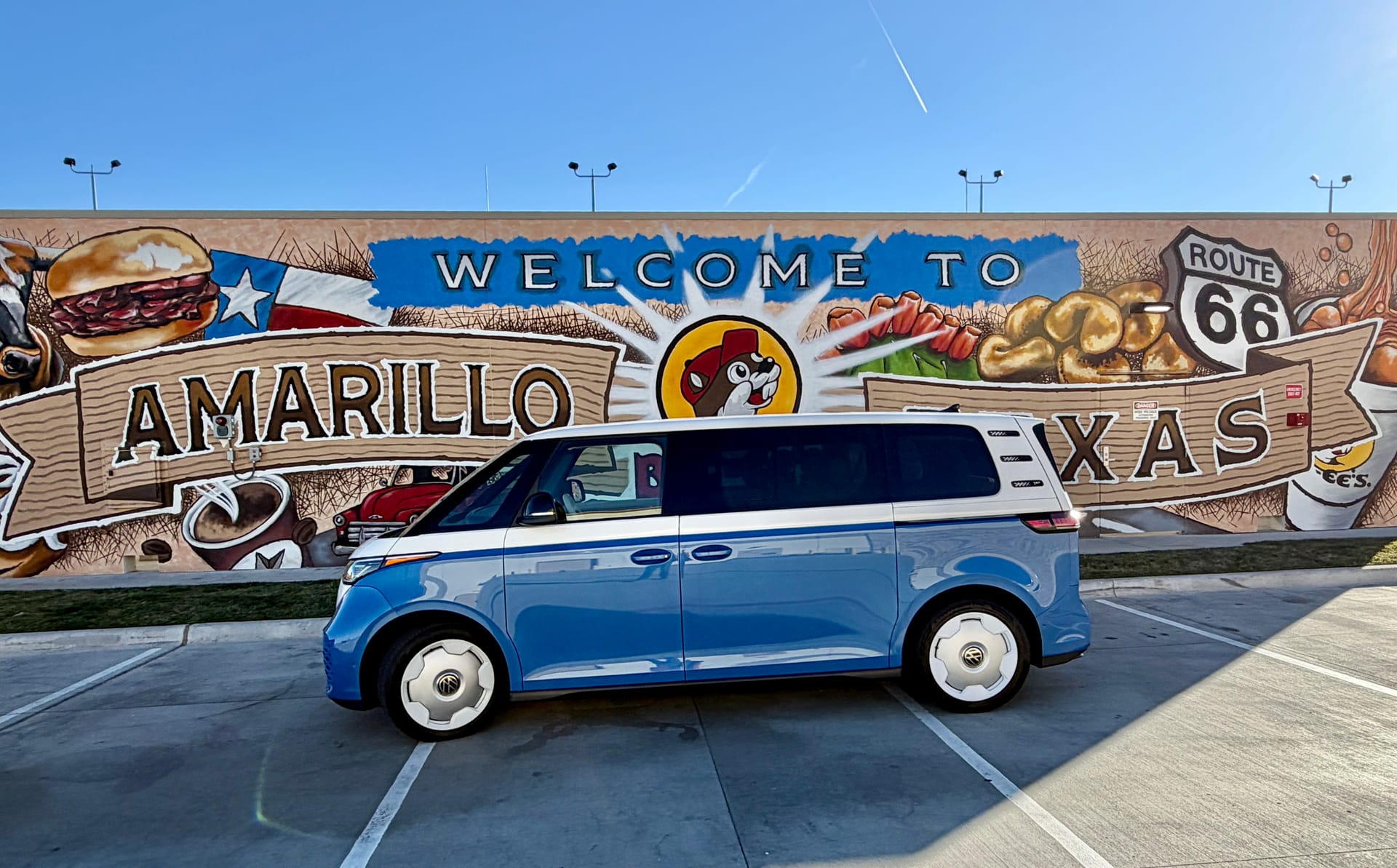
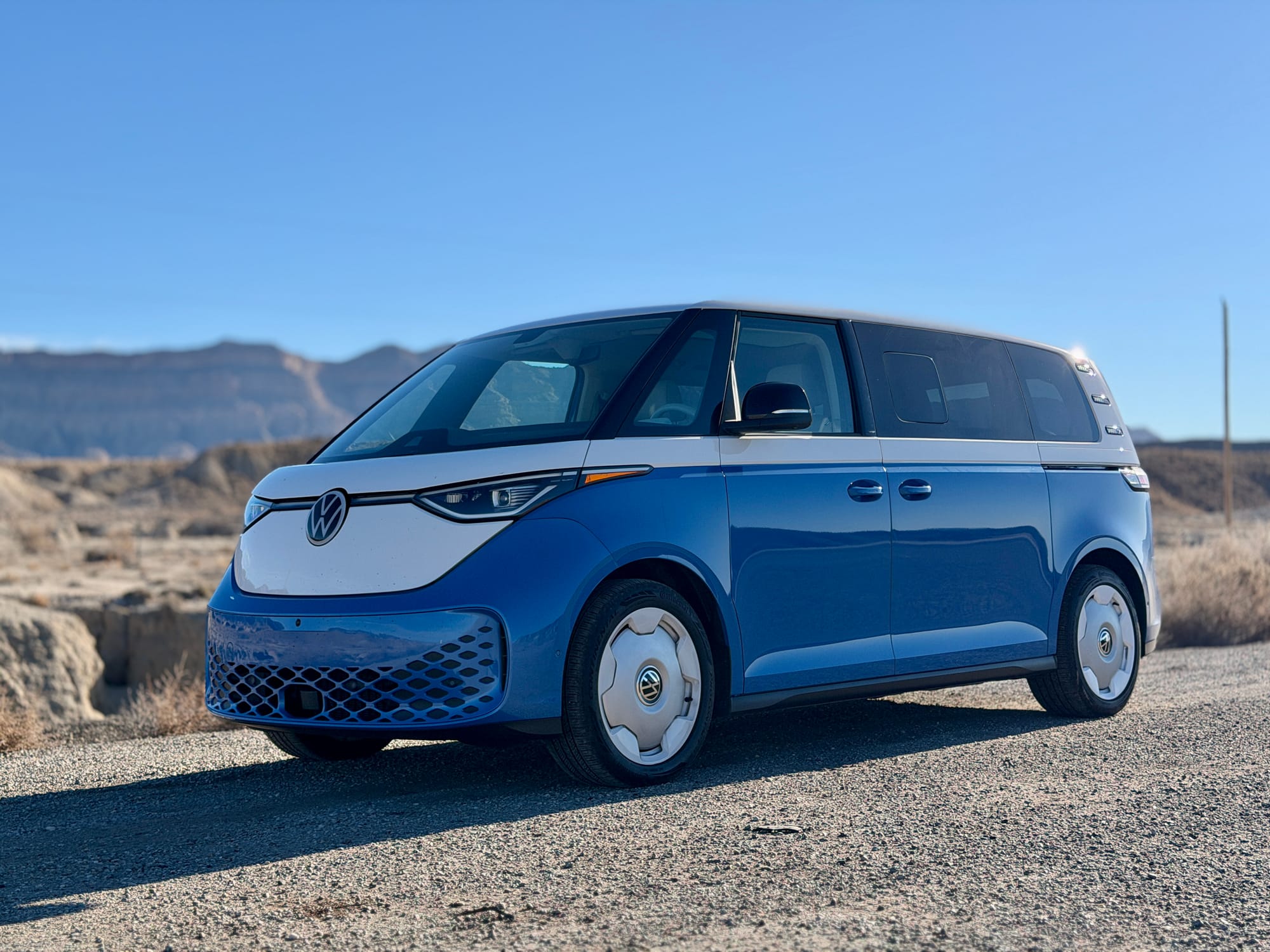
I just got back from a long drive in my wife's new-to-her car, a 2025 VW ID Buzz 1st Edition 4Motion in blue. On Thursday of last week, I flew to the Dallas/Fort Worth airport, got picked up by the dealer, signed some paperwork, and after a quick dinner stop at Whataburger, I headed west.
I got home to my northwest corner of Oregon at 3pm on Sunday, and I had a blast doing it. The country is so much bigger and more beautiful than you can imagine, and driving an EV doesn't make long trips too difficult, but it does occasionally throw unique challenges.
Here's my whole story.
Why the VW ID Buzz?
When I was kid, my parents briefly had a Baja bug and I loved it. I also had a cool youngish uncle who owned not only the 1983 VW GTI when it debuted but also a slick VW Eurovan in the 90s. My wife's first ever new car purchase was a 2002 Jetta Wagon TDI that we loved for nearly 20 years. And there's also the Jetta I built last year for my brother-in-law when he wanted a Jetta wagon from that era as well.
But what really captured our interest was VW's concept vans over the last 25 years. It started with the first one, shown in 2001 with a design that was close to the then-recent retro designs of a Bug (VW's New Beetle) and the Karman Ghia (Audi's TT). This retro VW Bus concept would look right at home when it was beside its design siblings.
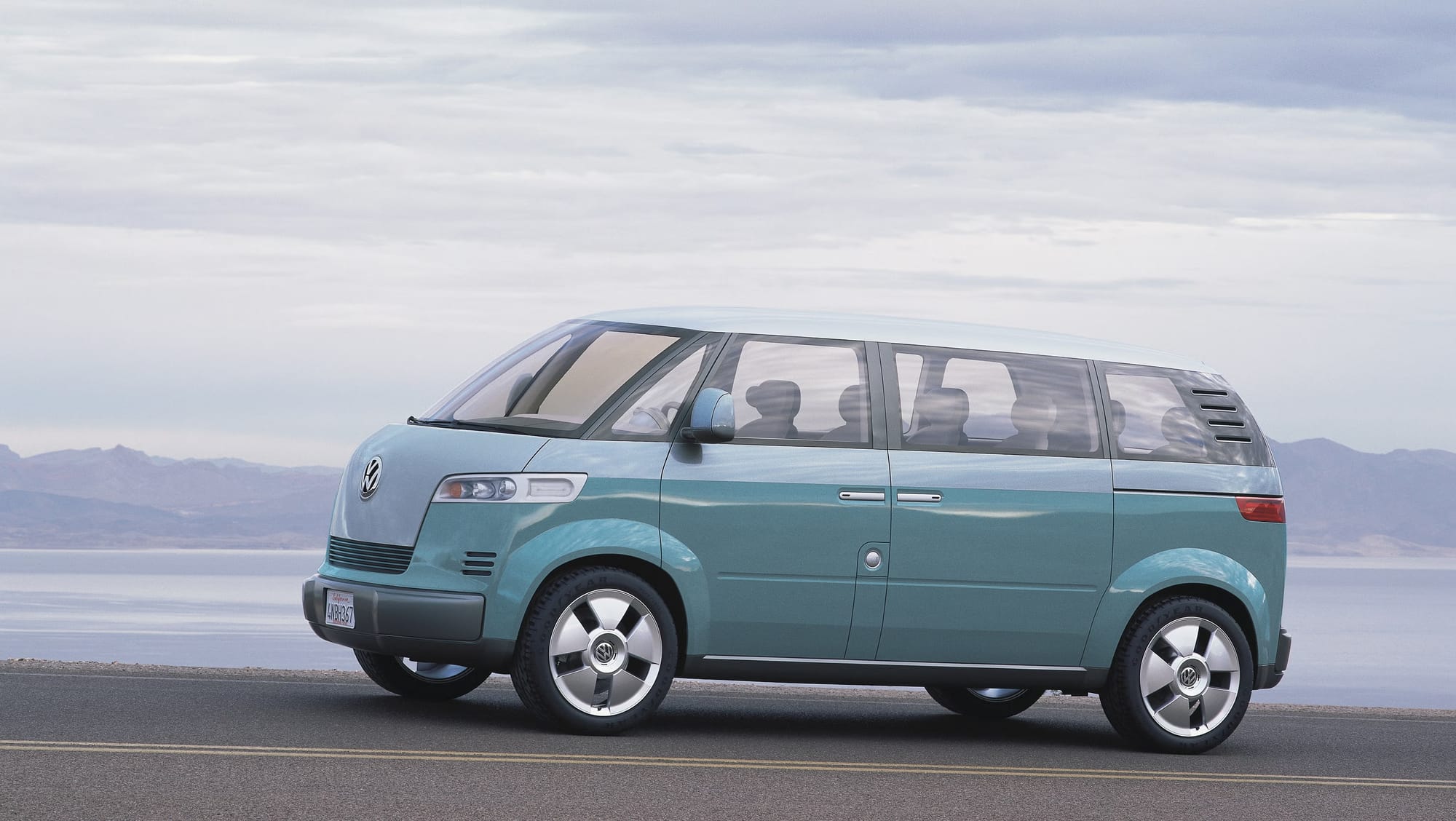
I remember showing this photo to Kay back then and she said "Whoa, if they ever made that, it'd be the first minivan I'd actually want to own." VW forum posters said the production costs were apparently too high, so VW never made it into anything you could buy.
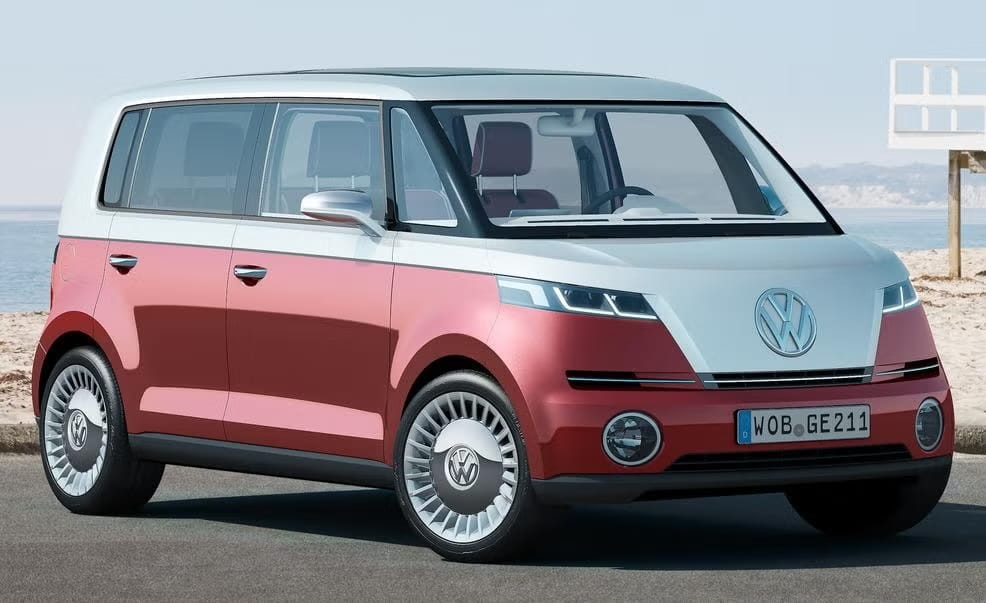
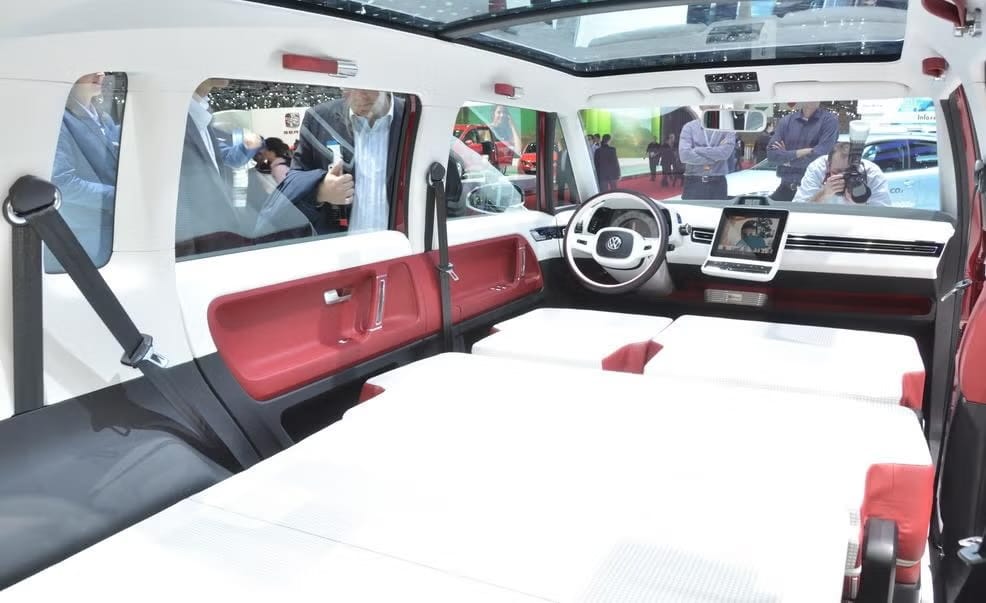
Ten years later in 2011, VW debuted another bus concept with an interior that could lay entirely flat, and honestly I love not only the outside looks but the inside because it's so close to the current production Buzz. But again, as cool as it looked and as much as people online wanted one, they never pushed it to production.
In 2017, they debuted the first Buzz concept that lead to an actual van you can buy today. I heard rumors that VW tried to release this around 2020, but COVID delayed the production release another 3 years after.
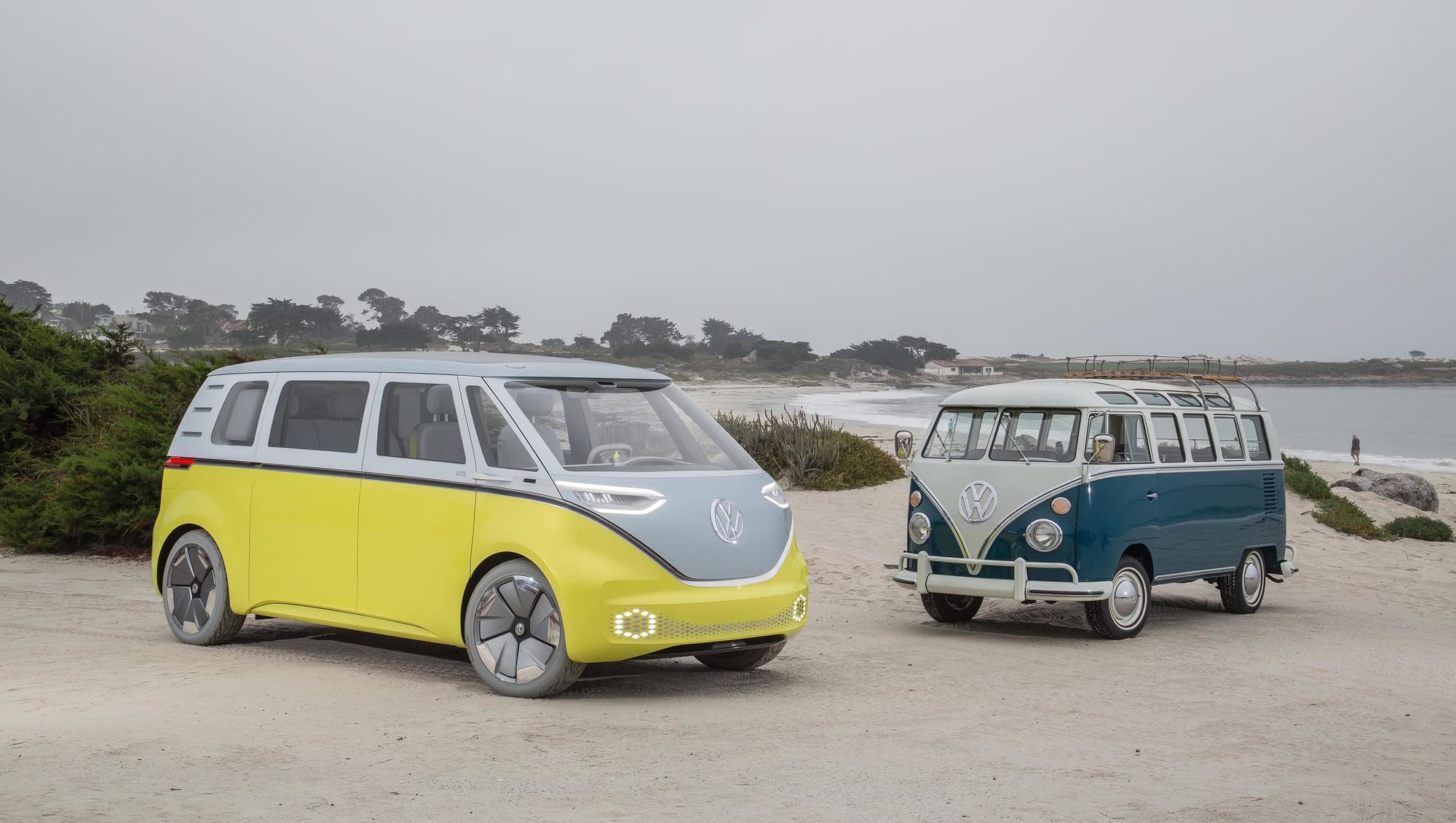
The VW ID Buzz is finally here and I love the design of it from the inside out. I got to test drive one last fall when they first hit our shores, but my local dealer wanted $84,000 for one of the launch editions, since they tacked $12k onto its $72k sticker price due to "demand". We thought the price was ridiculous so I figured we'd wait it out, hoping to pick one up cheaper when EV leases on them were up in 2-3 years.
My local VW dealer had every color in stock at launch and as much as I don't usually gravitate to blue, the Cabana Blue/White Buzz was definitely the best looking to us and the exact one we wanted.
Why now, and why Texas?
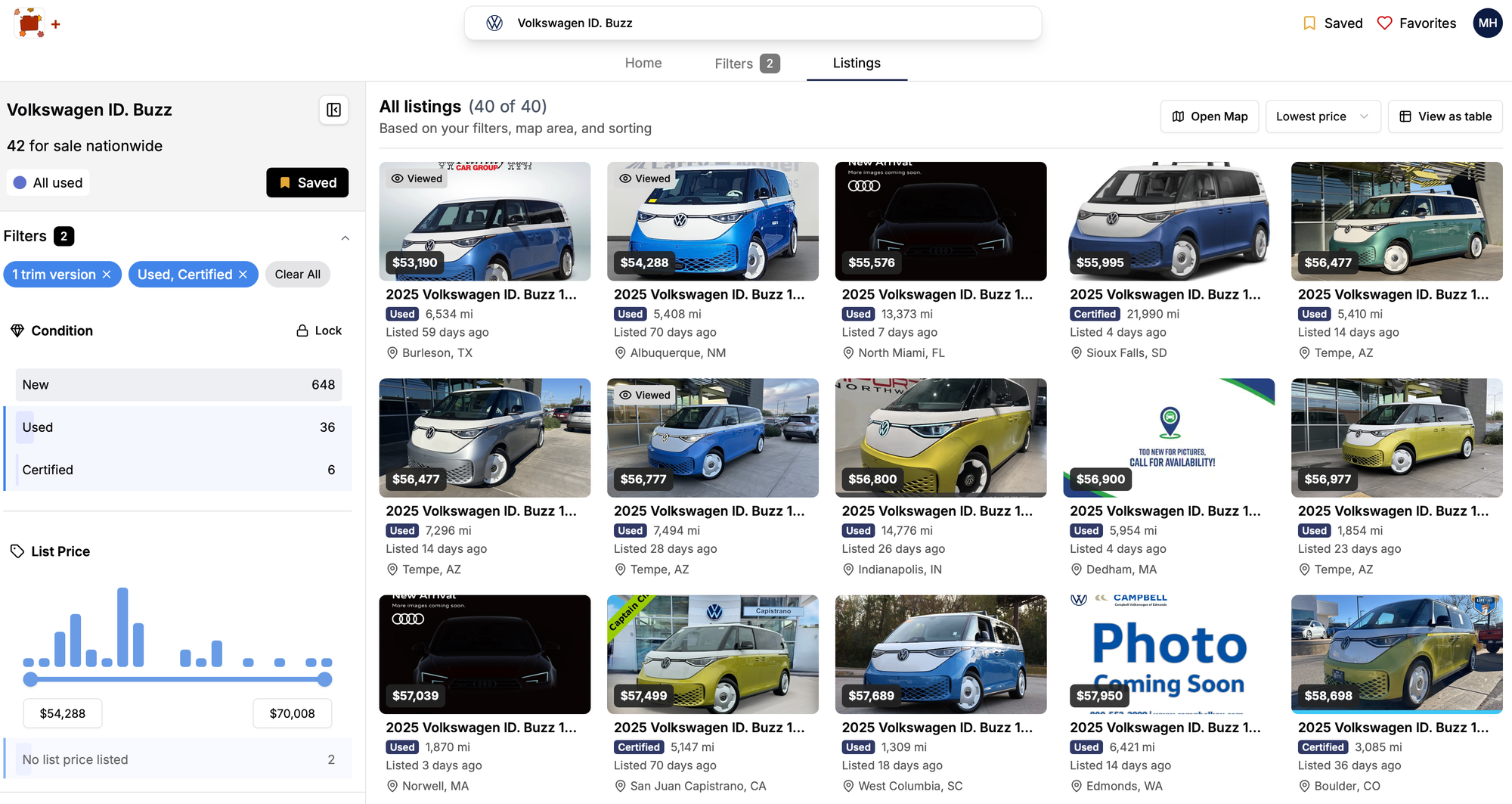
I wrote about how much I love the app Visor.vin, which is the best way to search for cars in America. You can filter results down to specific colors and options and save those searches, then you'll get updates if any new matches show up or if prices come down on the existing cars you are tracking.
I've had a search for all 1st Edition VW ID Buzz vans in America for the past few months and I've watched as so many used EV prices plunged to reasonable levels. Like professional car reviewers I watch on YouTube, I agree that the ID Buzz is a ridiculously cool van with great features but it's price is too high. It would be a best-seller for VW if they sold it around $50k, but at $70-80k, it's too much for what it is.
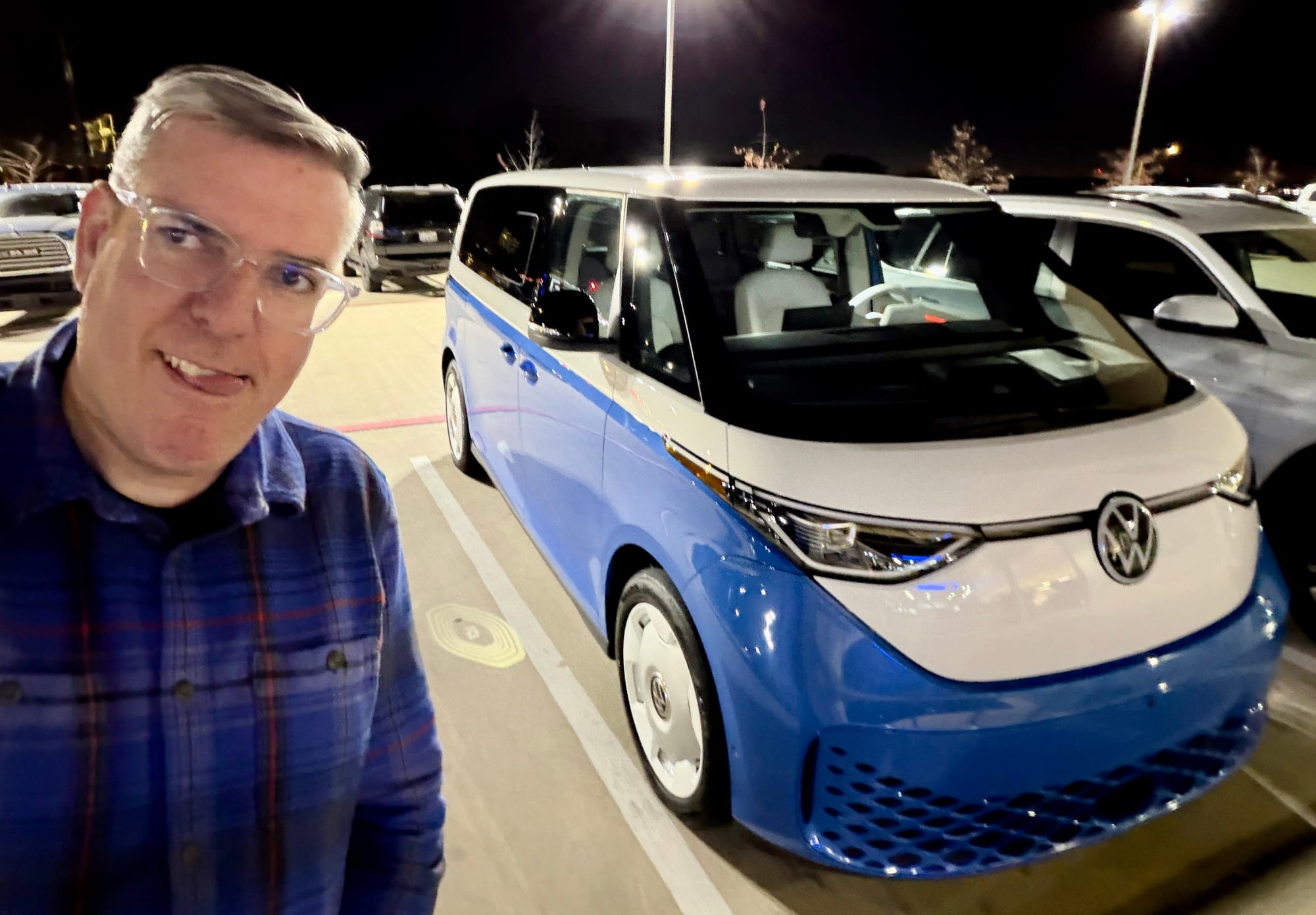

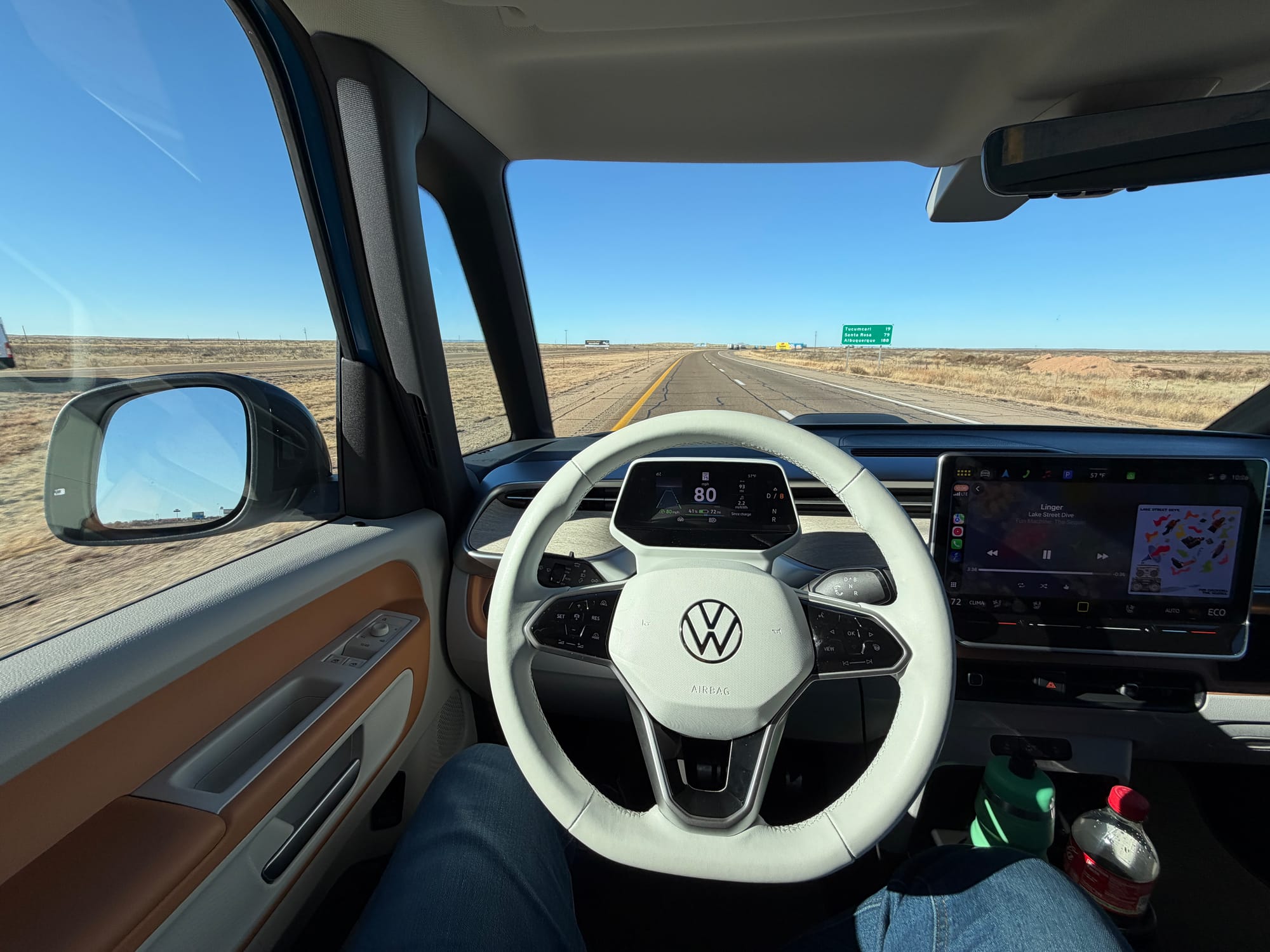
Picking it up, charging it the first night, driving across Texas
As time went on, the prices I tracked dropped into the low-$50k range and given these are less than a year old and only have a few thousand miles on them, they're as close to brand new as you can get (the one I picked only had 6k miles on it).
I started reaching out to dealers and the cheapest blue ID Buzz in America happened to be in Texas, where the Family Volkswagen dealer was nice enough to negotiate with me over email/text (most car sales people insist on badgering you with phone calls). Within a day, they gave me an offer that included a new certified pre-owned (CPO) 3 year warranty attached, so I wired them some money and booked a plane ticket to pick it up later that week.
The trip
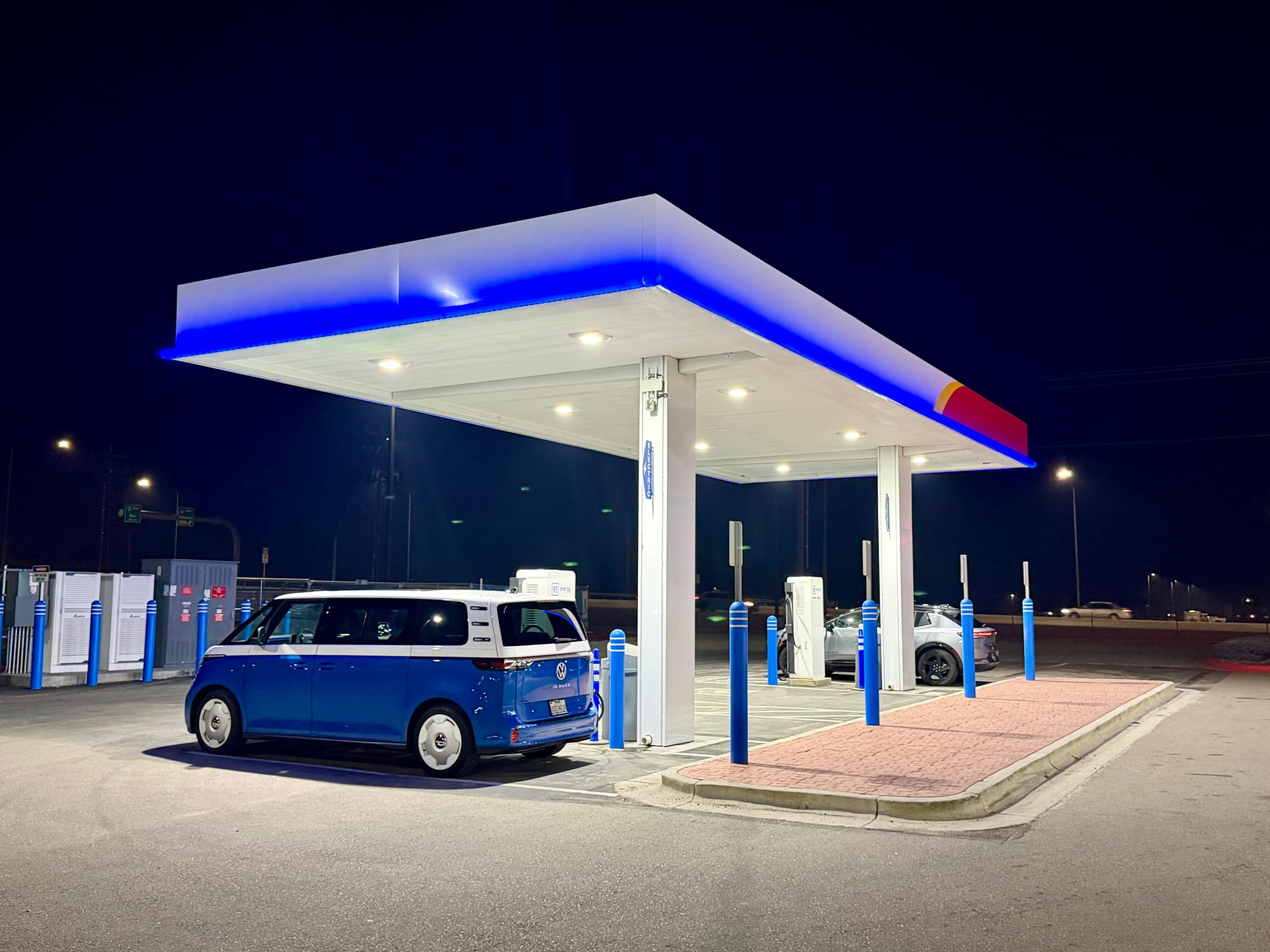
The dealer quoted me $2,200 to ship it back to Oregon, but it would take a couple weeks and I figured I could drive that distance in just a few days for less money, plus, what better way to get to know a new car than to spend half a week in it?
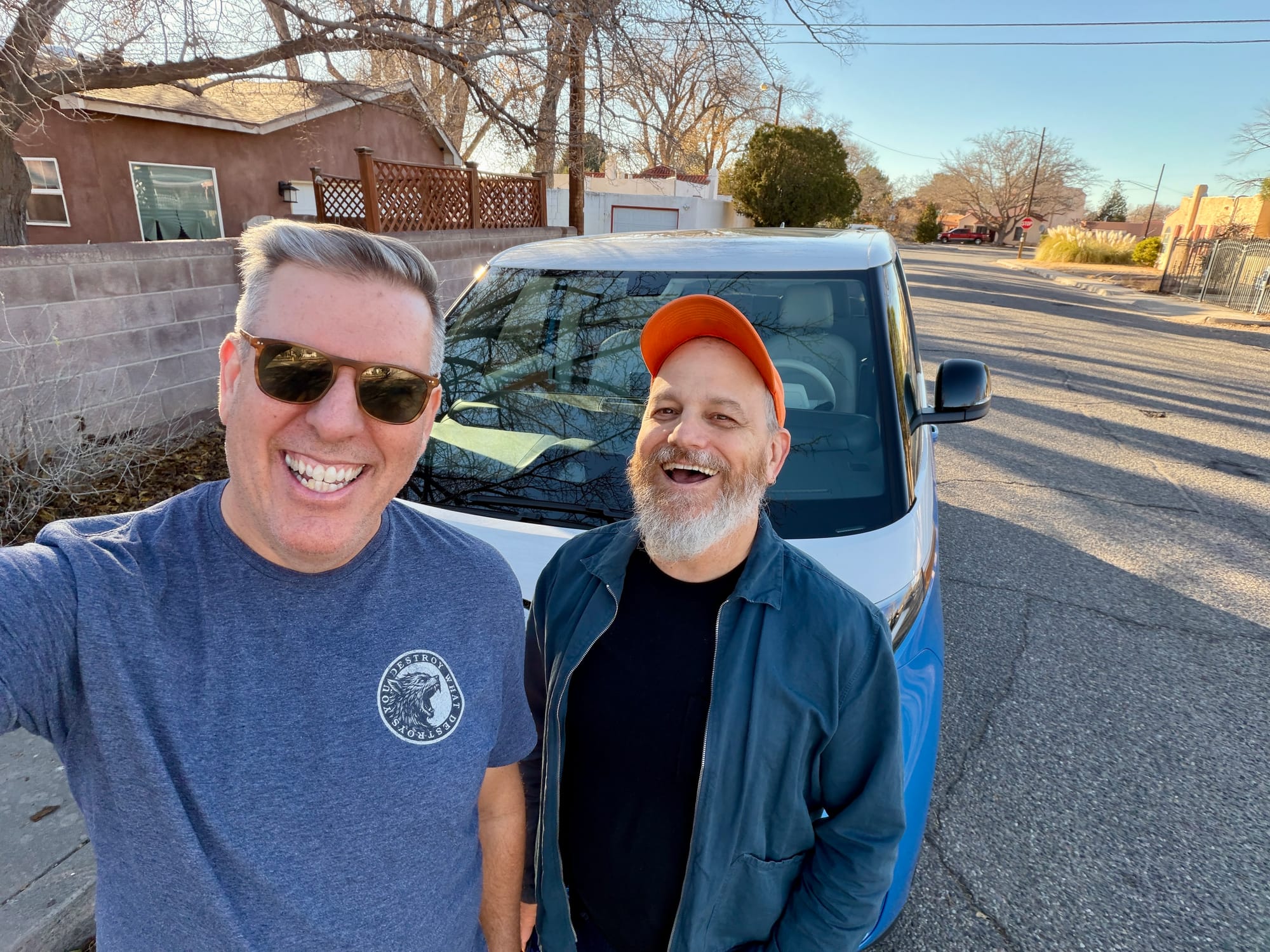
I haven't done the full accounting for the trip, but with a flight, three hotel stays, and about 20 high speed charging sessions at $20-30 each, I probably spent about $1,200 in total, but the views were spectacular, and I got to hang with friends in Albuquerque and Salt Lake City along the way.



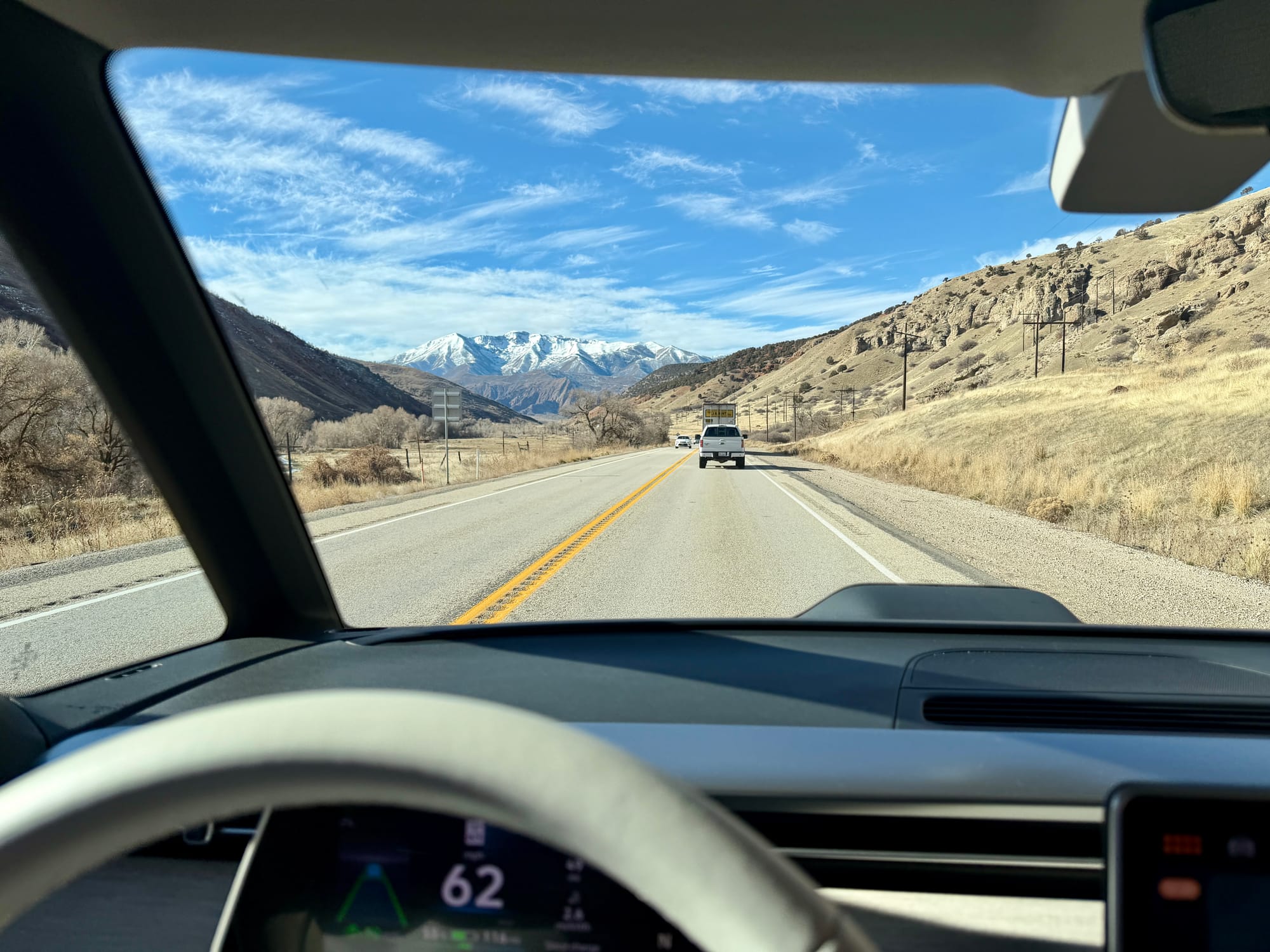
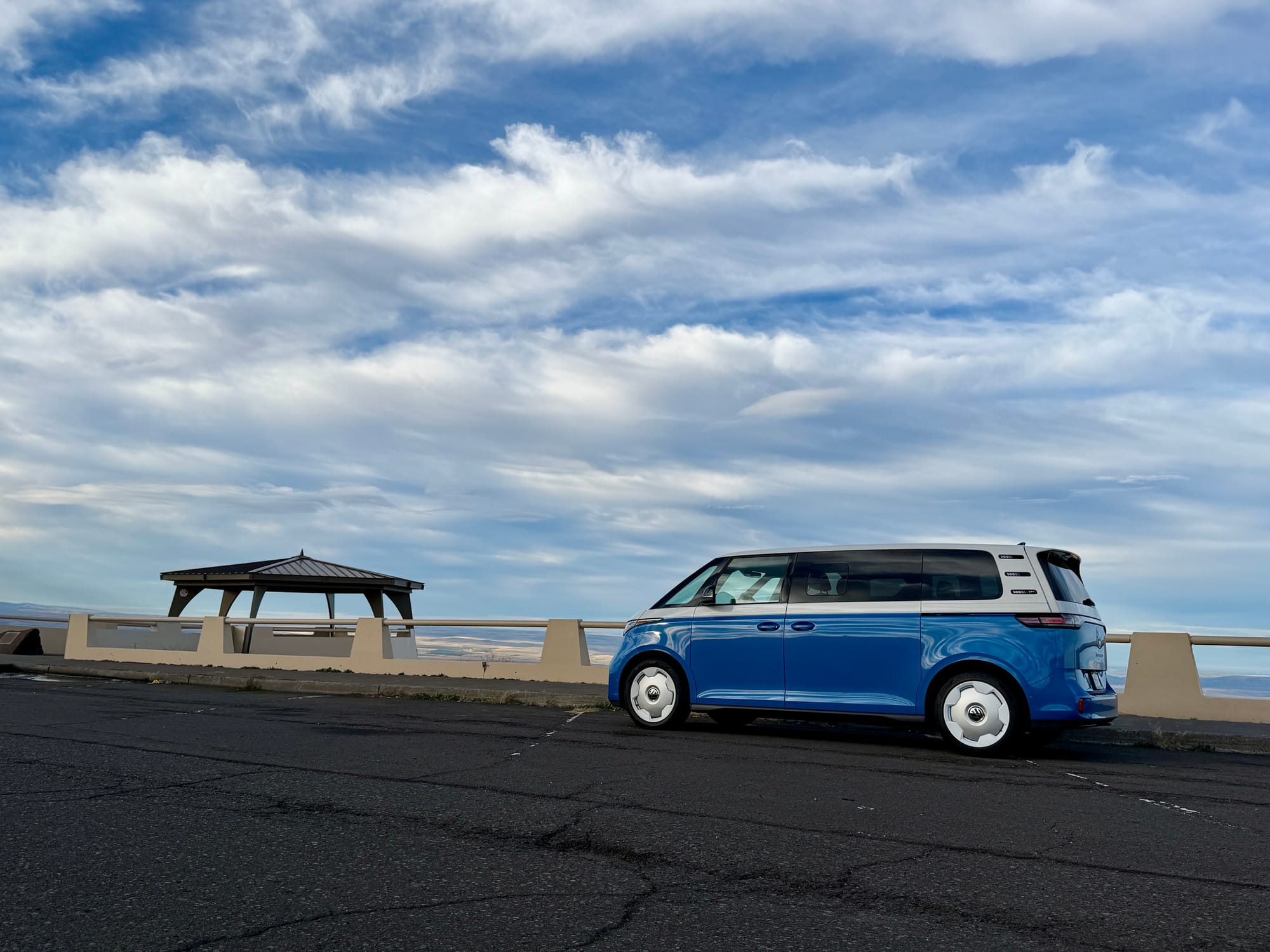
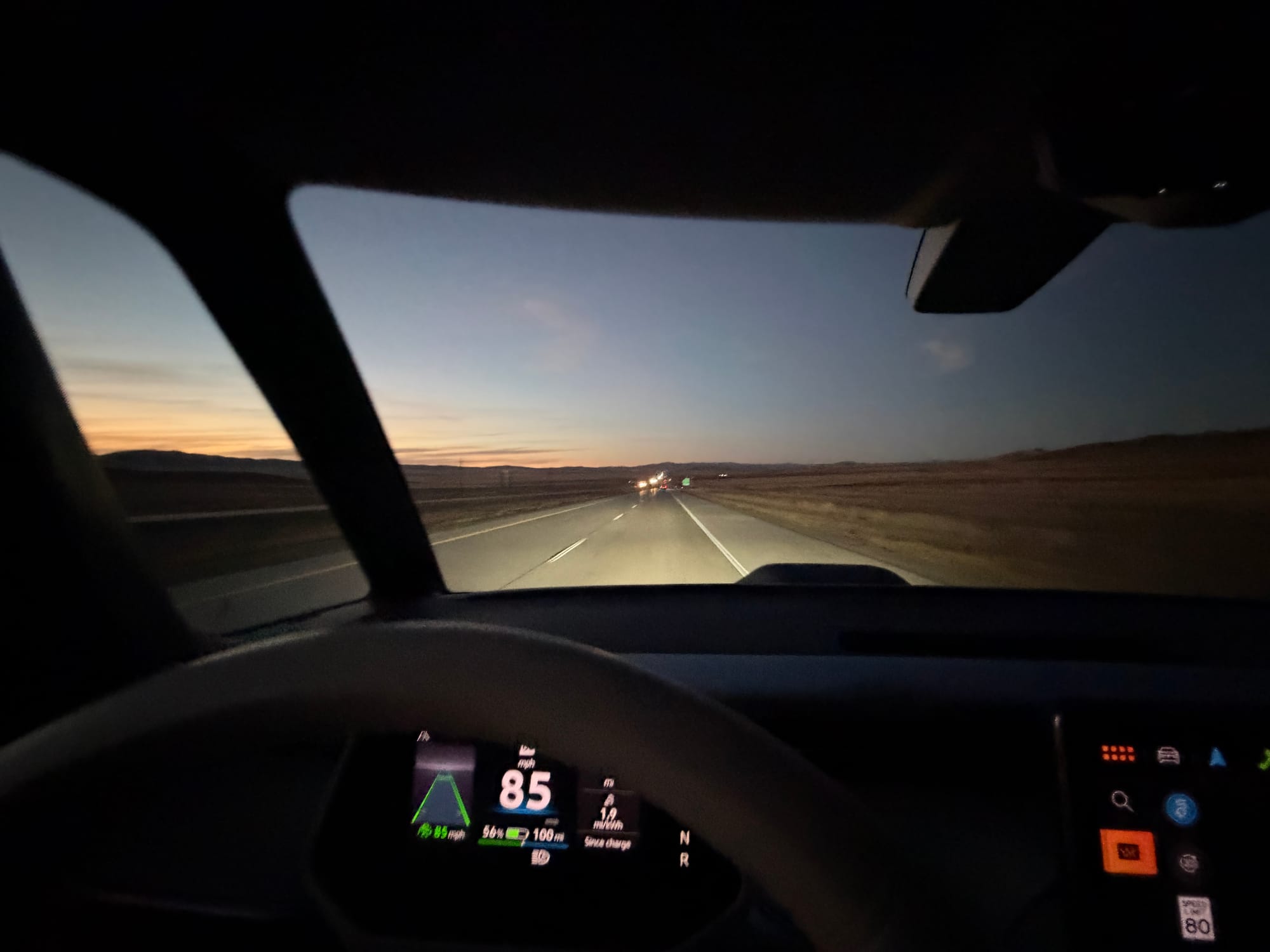
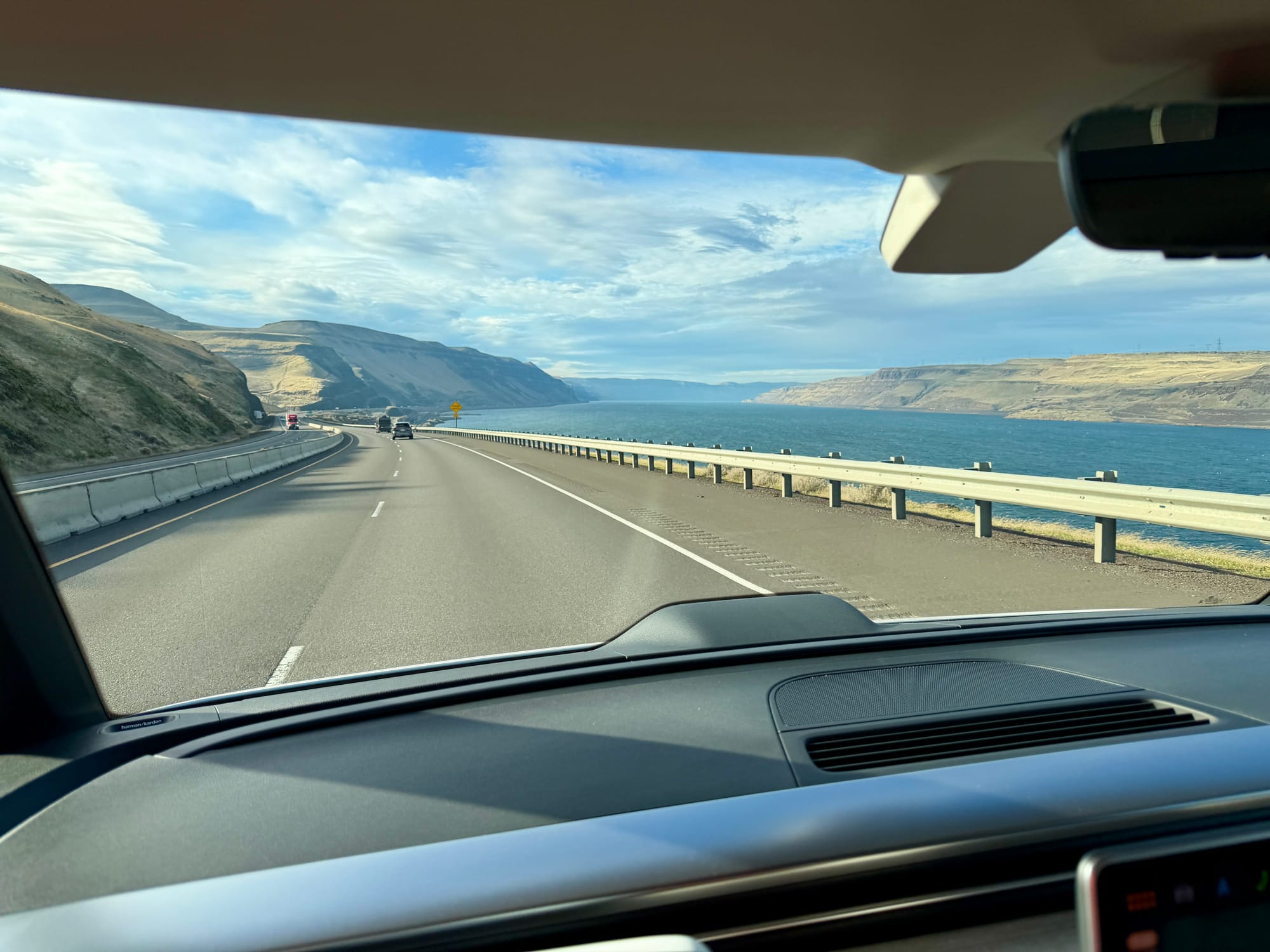
How many stops did it take?
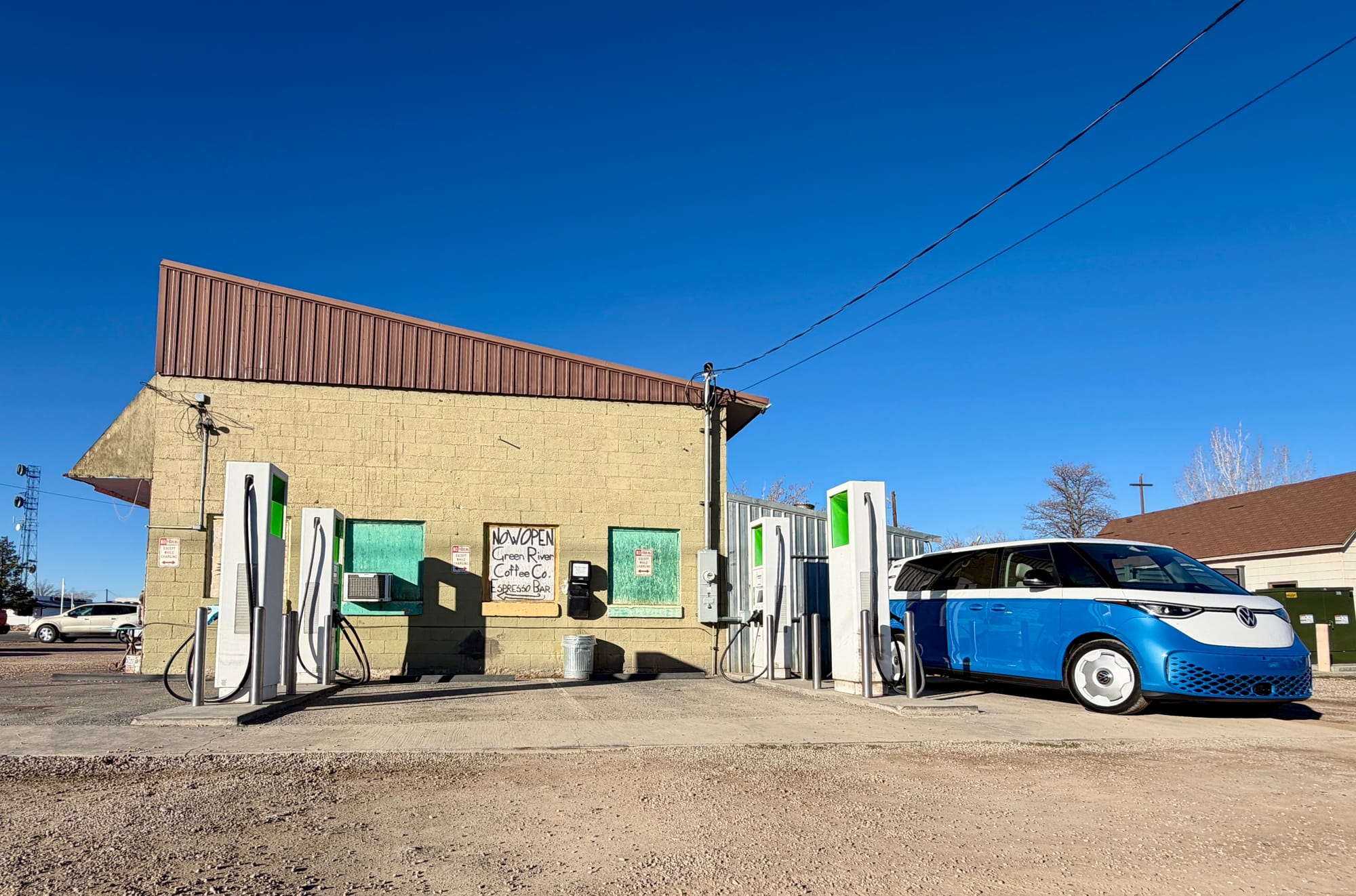
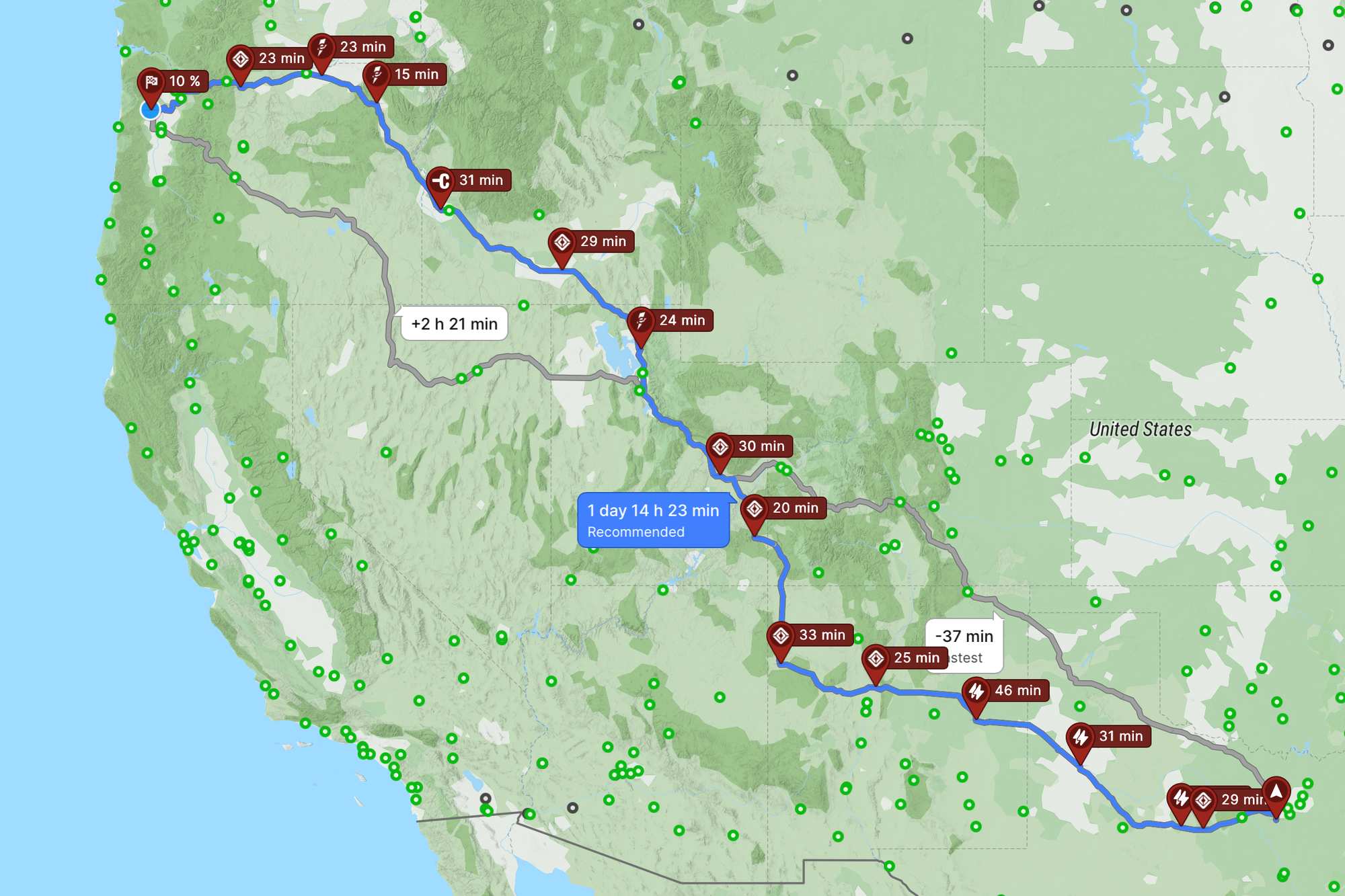
My charging history reveals the full path home:
- Wichita Falls, TX
- Childress, TX
- Amarillo, TX (end of day 1)
- Tucumcari, NM
- Santa Rosa, NM
- Albuquerque NM (lunch, day 2)
- Cuba, NM
- Farmington, NM
- Cortez, CO
- Moab, UT
- Green River, UT (end of day 2)
- Price, UT
- Salt Lake City, UT (lunch, day 2)
- Snowville, UT
- Burley, ID
- Mountain Home, ID
- Caldwell, ID
- Huntington, OR
- La Grande, OR (end of day 3)
- Boardman, OR
- Hood River, OR
I used fast chargers from the following companies:
- Blink
- Electrify America
- Tesla
- ChargePoint
- General Motors (rebranded Electrify America)
- Franklin Energy
- Rivian Adventure Network
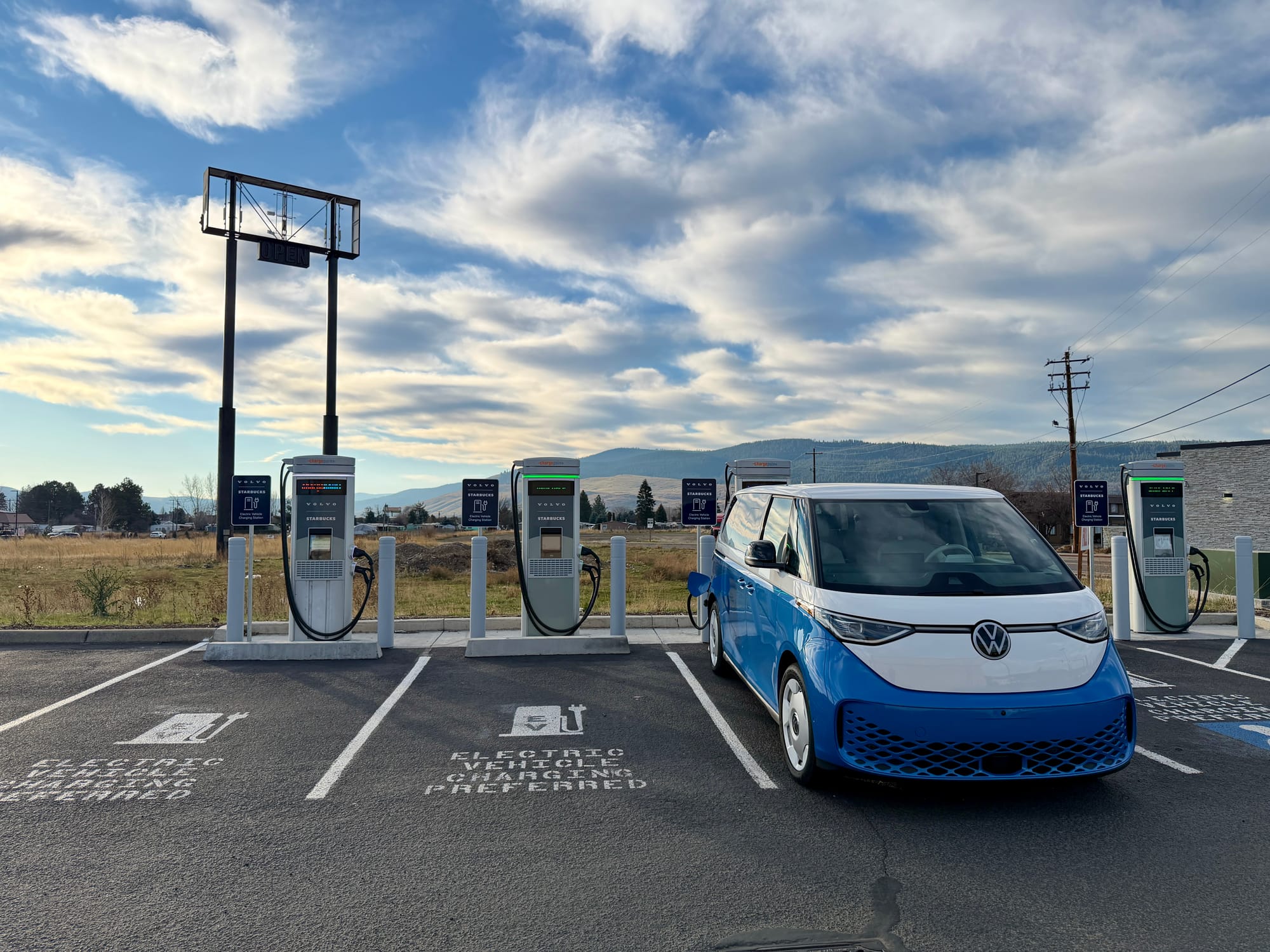
- Volvo for Starbucks (rebranded ChargePoint)
What charging is like in late 2025
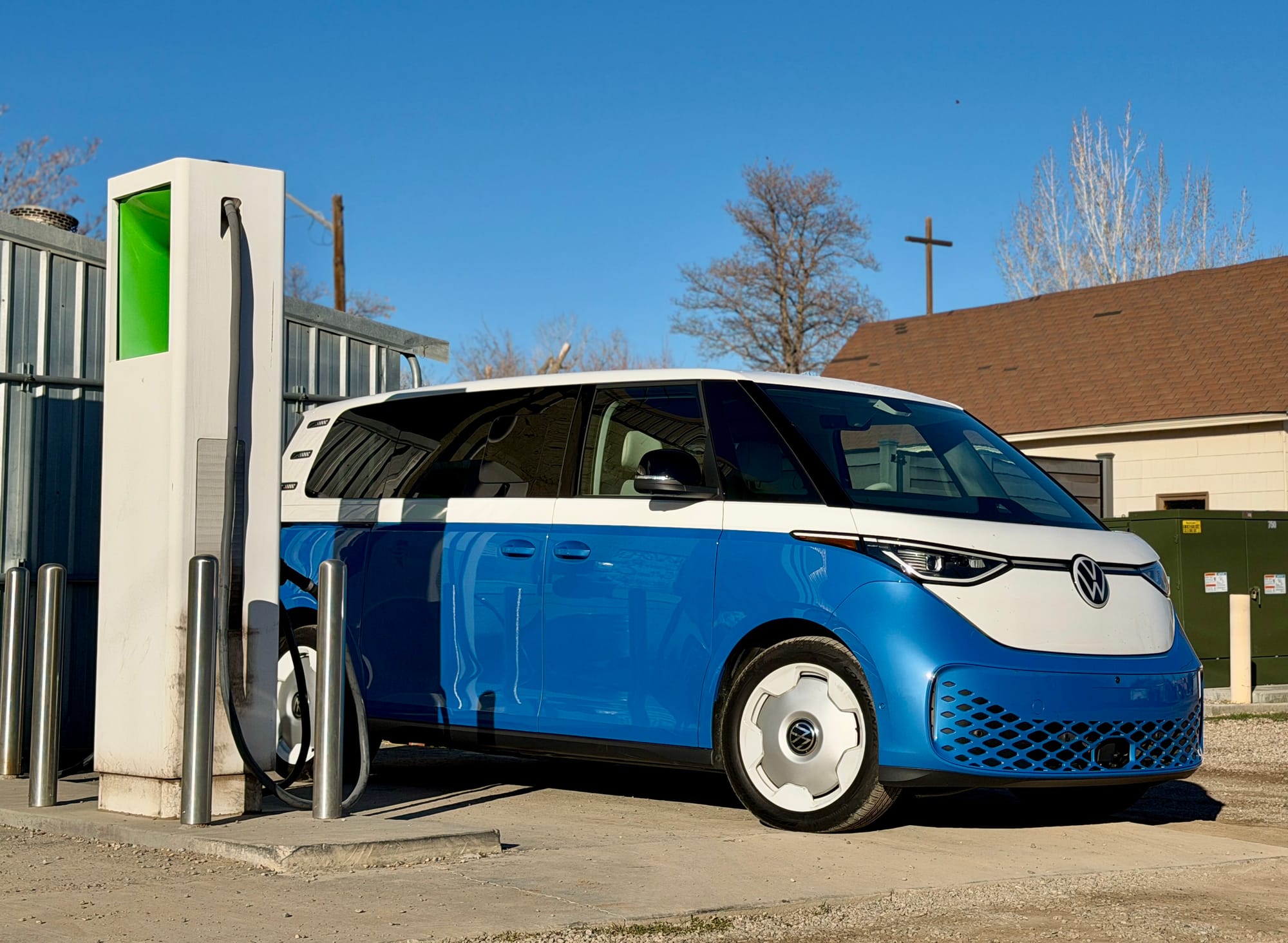
This isn't my first long road trip in an EV, but some of the challenges I had in that first trip happened here. About half of the Electrify America stops had at least one broken charger. Few of the chargers delivered close to the 200kW max recharge rate of the Buzz, but that was probably due to VW's battery limits in winter conditions.
One key difference between my 2022 trip and this 2025 trip is that thankfully almost every charger had a card reader on it so I could tap to pay and charge instantly. Back in 2022, I was forced to use an app for every charger network that required you to have an account attached to a credit card and that sometimes took 10 minutes to set up at each new charger I hadn't been to before.
Twice on this trip, I got to a charging station only to find it was full and had a line of people waiting to charge, so I had to look elsewhere. My biggest blunder was seeing a fast Rivian charger in a tiny town in the middle of nowhere, Price, Utah on Apple Maps. When I drove up to the location, I found out it wasn't done being built yet. So I had to use a slower 75kW ChargePoint station that took almost an hour to charge the battery back up because I was on my last 20 miles of range. Oops.
As much as I hate to give a single dollar to Tesla, since they opened their charger network to other cars, I used them when I had no other options. On the positive, they were reliably the fastest chargers that maintained close to 200kW of charging and they were often the only choice in remote spots. But there were also times where there wasn't a Tesla charger for over 200 miles in any direction so their network is still far from perfect.
In general, I used Electrify America spots and they were most frequently in a Walmart or Target parking lot. But there were a lot of new chargers from all kinds of companies at truck stops which was nice to see since those places always have plenty of food and restrooms. I wish the higher-end chain gas stations like Maverik or Buc-ee's would put fast chargers at every location so you'd know to always look for them there.
For this trip, I used VW's built-in trip planner in the center touchscreen since I heard good reviews of it and I‘d say it was mostly good at planning stops along my path. When I'd enter a whole day's worth of driving each morning, VW's software would always make at least one terrible choice for a slow charger and tell me to sit for 4-8hrs recharging at a library when down the street from that same location there might be another charger that could recharge it in 20min. I have no idea why it would pick L2 slow chargers when L3 options were available. It reminded me of trying to use ChatGPT to solve a problem, generally correct but always having a wildly wrong curveball thrown in somewhere.
I generally started each day like this:
- Pick a city about 700 miles away and run it on the VW nav
- Check the list for anything that looks suspect or slow
- Load up apps for each charger's network listed to make sure they're in operation
- Check PlugShare for more charger options near any suggested chargers to see if there are better options
- Use Tesla's app find a charger for any spots that didn't have high speed charging options
- Check map apps for things around each charger before you arrive
- When you look at hotels, check PlugShare to see if they have a slow charger (almost none of them did on this trip, which is weird since I usually see L2 chargers at most west coast hotels)
Most days, it all worked out. After I set the VW to prefer Electrify America's 350kW high speed chargers, it gave me good options about 80% of the time. I continued to use the other apps to fill in any gaps. Jumping between apps to do research on the next charging stop was easy to do during the 15-20min I was sitting at a charger.
How does range anxiety work on a long EV road trip?
My general path home was from Dallas, TX towards Albuquerque, then up Utah, over to Idaho, then Oregon. The shortest path possible went up towards Denver but I wanted to avoid Colorado just in case it snowed.
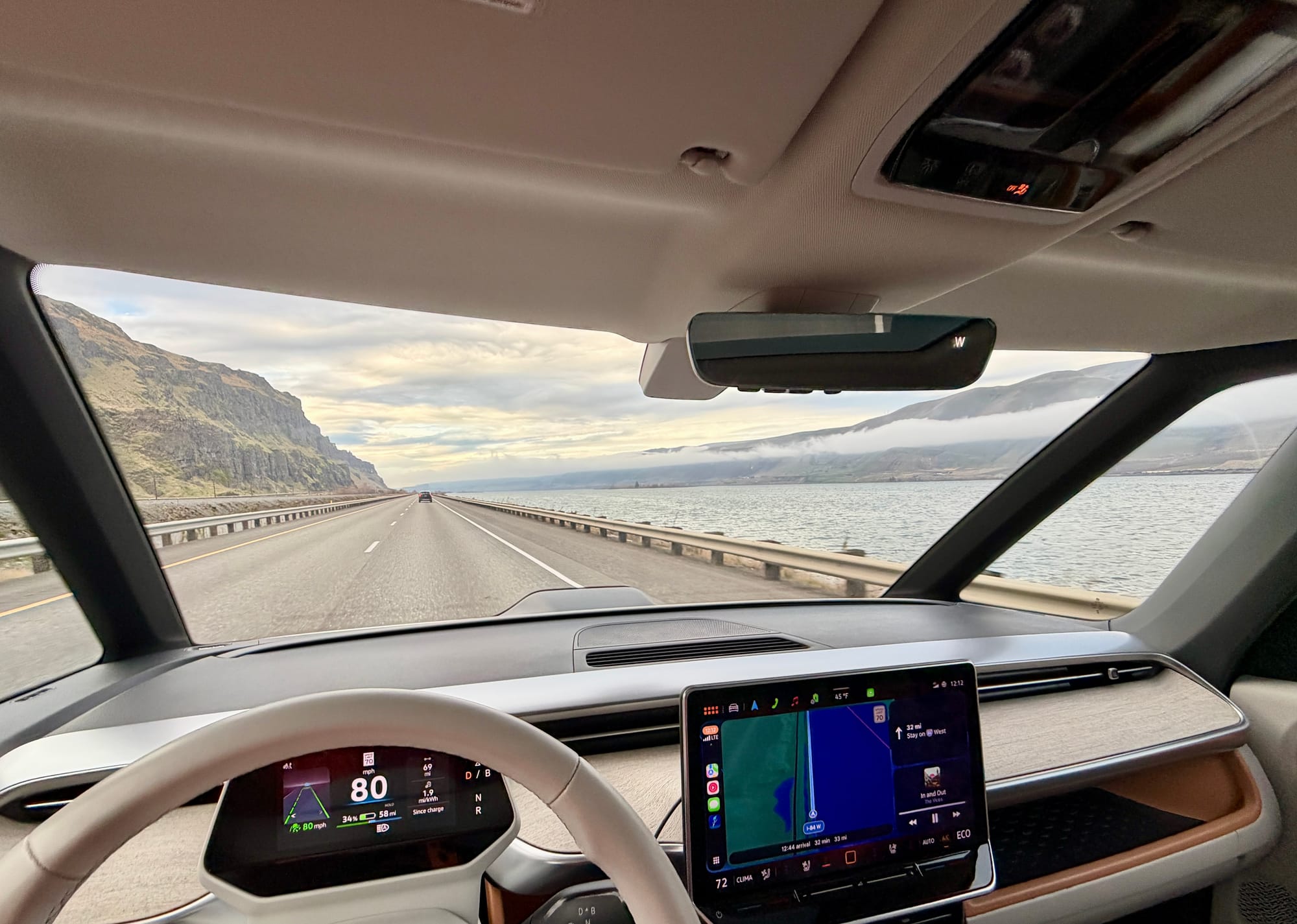
This road trip had two challenges. One was the smallish battery size in the Buzz. It's only got 91kW of storage (it probably should come with a 120kW battery) and since the car is shaped like a giant brick and it seats 6 to 7 people, it's not super efficient. The most range you can expect on the best day is 235 miles, but when you road trip, you generally drive while you have between an 80% charge to about 30% charge remaining. The charge time from 80-100% is generally so slow it can double your charge time so you don't do it (and it can damage batteries long-term). Plus, EVs are more efficient in city driving with lots of chances to recapture energy during stop and go traffic, but on a highway going 70-80mph by yourself you don't get anywhere near peak efficiency.
With those numbers in mind, your actual drivable range is closer to half of your max, or roughly 100-125 miles per segment. That's why when I had a Rivian, the nav would tell me to stop every 150-200 miles even though the battery could do over 300 at a full charge.
The next problem was it was winter, but thankfully it's been mostly warm on the west coast with tropical systems that aren't bringing much snow. Still, much of the New Mexico to Utah section hovered around freezing temps at night and that cut total range down by another 10+%.
Most days I looked for chargers about 100 miles apart, and every 90 minutes I would stop to charge back to 80%, which usually took about 15 minutes. I could drive the battery down to 10% by stretching to 125 miles between stops and it would still recharge fast, only adding another 5 min to charge time. But when you dip below 20% charge in a strange-to-you town, something like a broken charger when you arrive can leave you stranded and scrambling for other options and I didn't want to stress too much about it.
I quickly got used to splitting up each day into a series of two-hour windows of driving, going 100-120mi, stopping to charge, then getting out to stretch my legs. This approach does slow down a road trip overall, but it's at a more relaxed pace. I got something to eat at every other charger stop, I used a restroom at each stop as I was drinking lots of water, and I stopped to take photos more often. If I was tired, I'd take a 20min nap in the back seats with a blanket I bought along the way. I honestly enjoyed all the stops and wondered how I used to go 3-4hrs without stopping in a gas car.
First impressions after my "test drive"
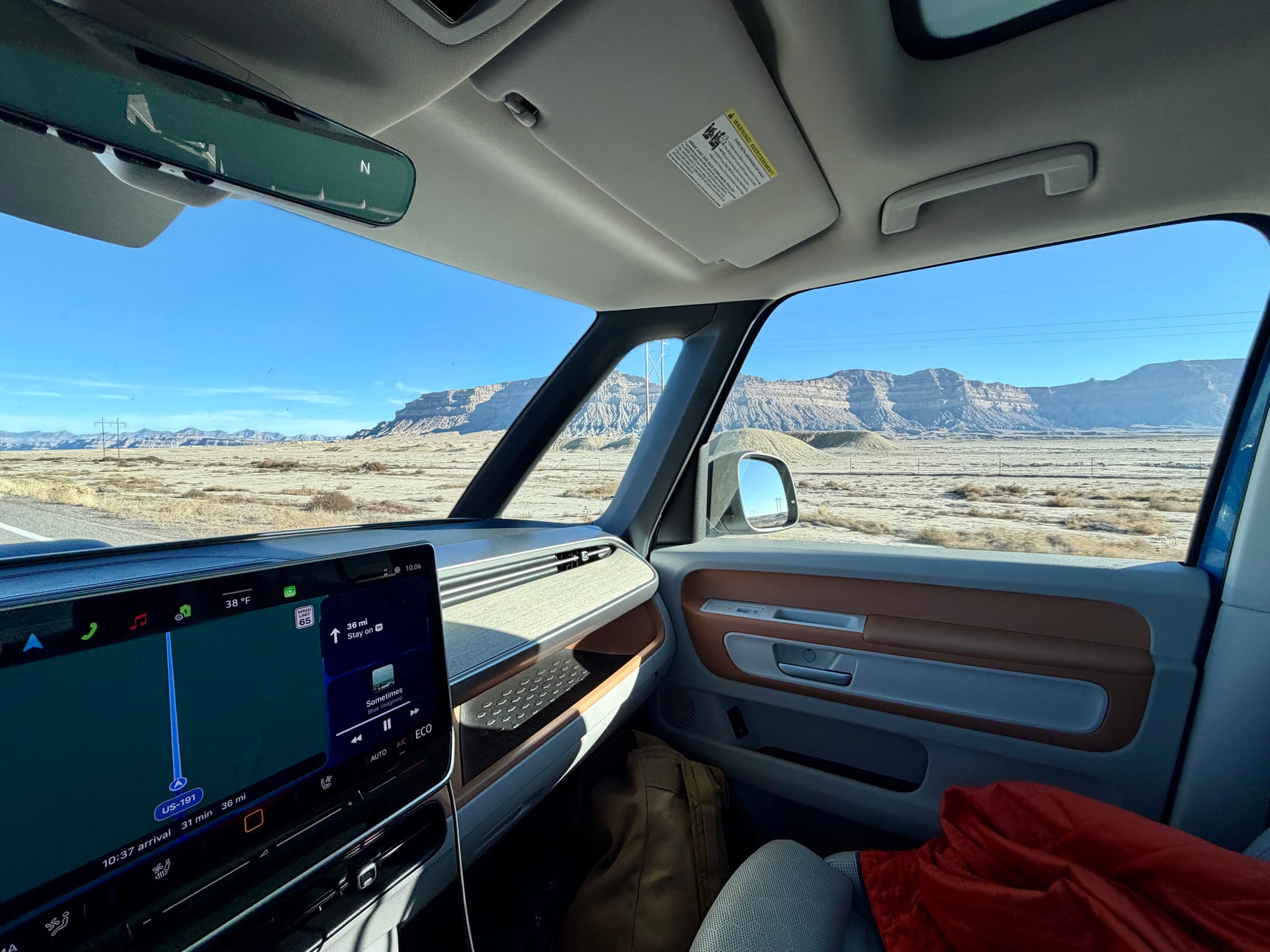
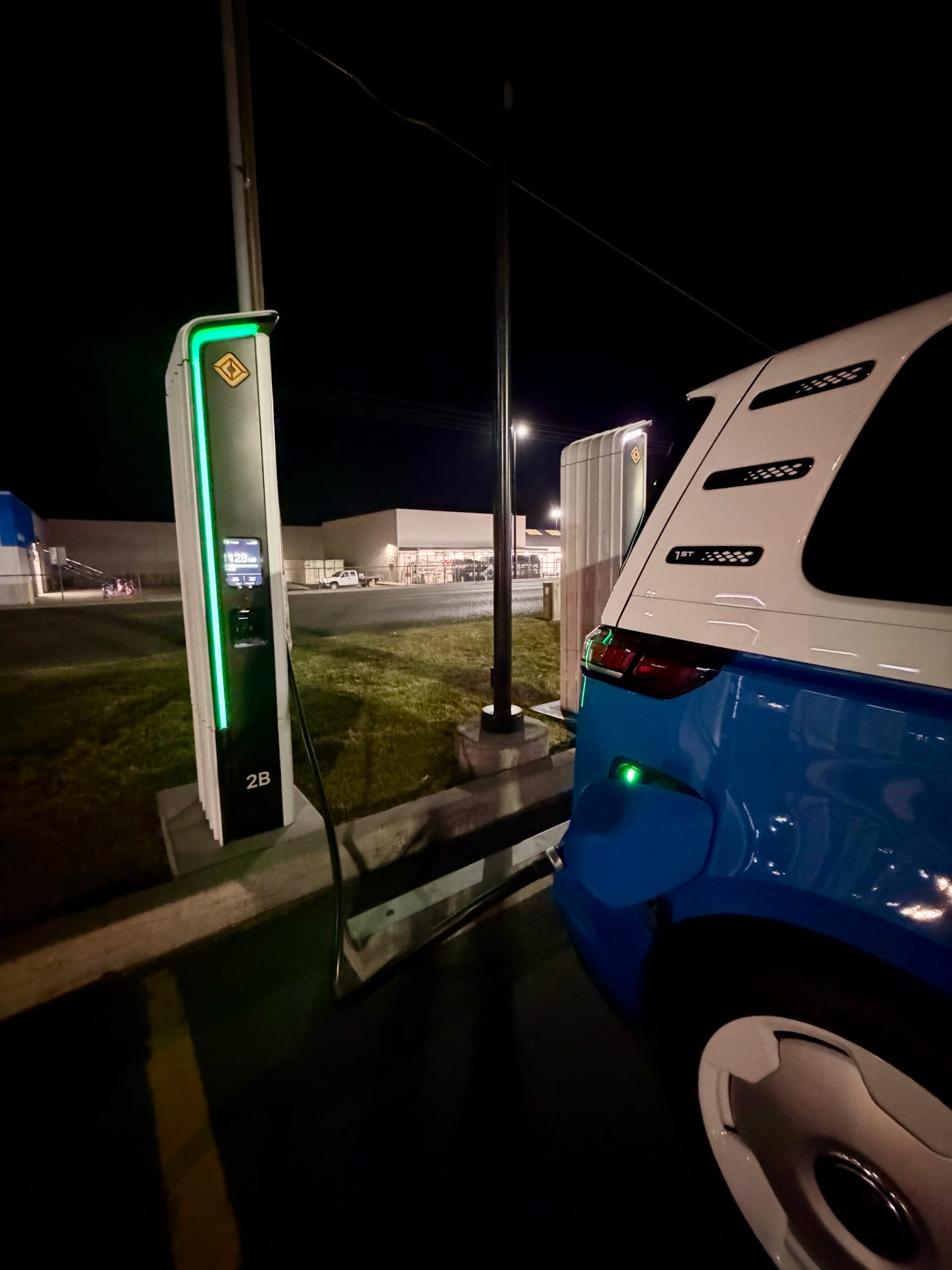
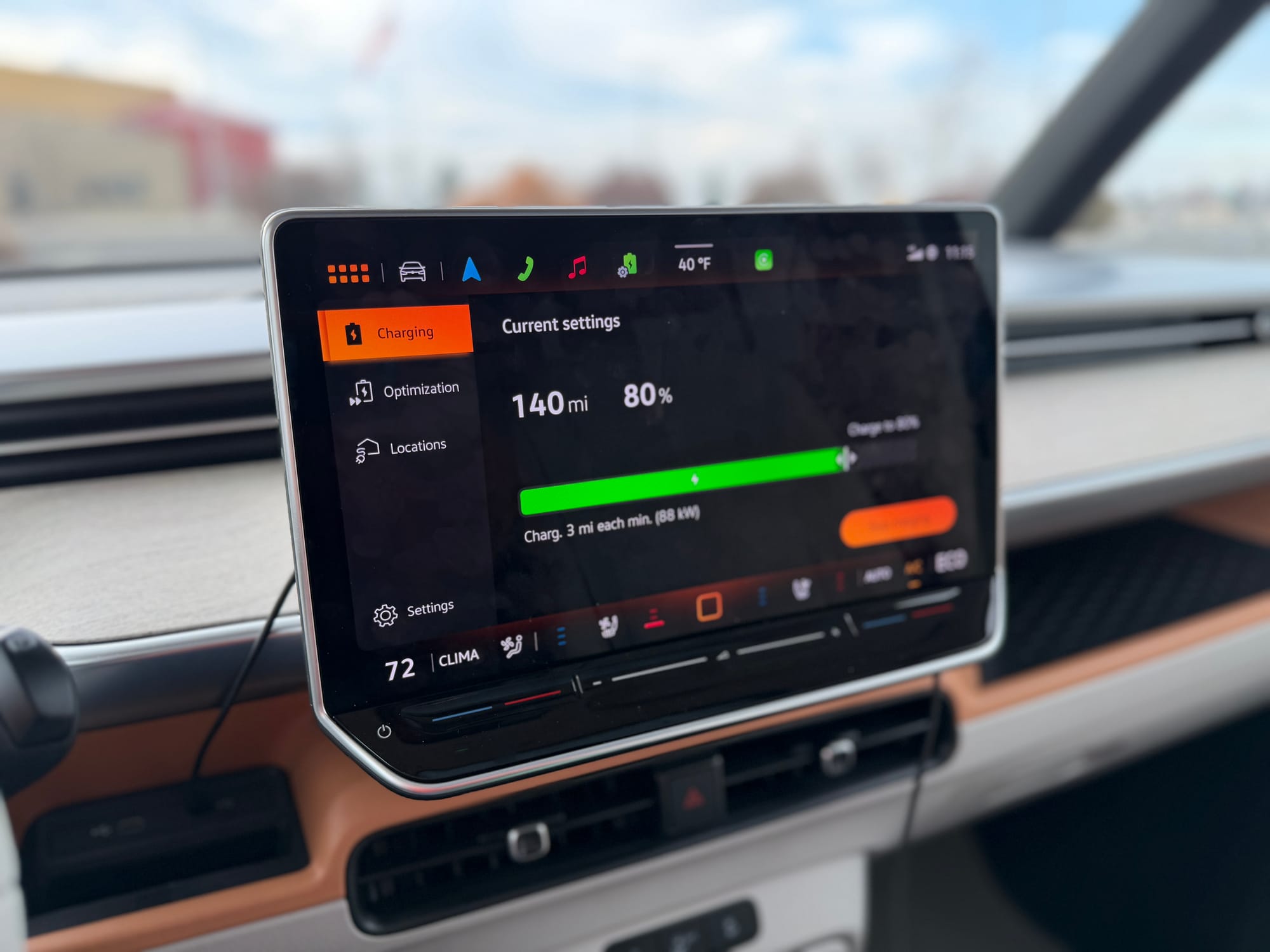
I had a great trip, saw friends, and enjoyed watching half the country slowly go by its massive windshield. Here are some highs and lows of the Buzz.
The good stuff
I generally love the ID Buzz after spending four days in it. The cabin is huge inside, the seats are comfy and the heated seats and steering wheel were nice when the temps were close to freezing. The center screen is big and easy to use, and there are usb-c charging ports all over the entire van, likely more than one per passenger. There is ample storage and the seats are spaced so far apart that as a 6'3" tall person I can sit in any of the three rows with seats all the way back and I still have a good 6" of room in front of my legs. It feels like a luxury car with features I've never had before like cold air ventilated seats, massaging seats, and auto-parallel parking.
The driver assistance features once you start using cruise control are incredibly good. I've driven tons of cars with a combination of lane keep assist and radar cruise but the VW system is very smooth, as it requires barely more than a finger on the steering wheel, and doesn't ping pong between wide lanes. It auto-steered smoothly on every road I encountered, both freeways and small side roads. The driver assist stuff made long days in the driver seat easy and stress-free. It's not complete hands-free auto-driving but it comes close on long straight freeways.
The looks of it are legendary and I love the off-white interior and giant panoramic sunroof. For such a big car, it feels light and airy when you're driving and there's almost as much space inside as a Sprinter Van I once owned. I can't wait to go out and buy long pieces of lumber that I know will fit inside it.
The not so great aspects
There are too many screen-based controls and not enough physical knobs. There isn't even a volume knob for the sound system, you have to tap a slider instead. All the HVAC controls are in a screen, so sometimes you have to take your eyes off the road to adjust the vents or temperature.
The most annoying aspect of the car is that VW put lots of buttons on the steering wheel and center screen to adjust settings, and they made those buttons clicky but also added capacitive touch. So that means you can either press them to "click" an option or wave your hand over them or do a light tap. Any of those three things will invoke a change, which means in practice is you accidentally tap buttons when your finger gets too close to something but I'm getting used to avoiding getting too close to buttons.
Honestly, I wish VW picked normal buttons and skipped the capacitive option, since it's not something that gives good feedback when you're driving, as you know when you've clicked a physical button without having to look at a screen. Adding capacitive buttons to everything just makes the controls less predictable since you're not sure if the car registered what you wanted to click or if it accidentally did.
Thanks to its cavernous size and tons of windows, it is louder inside while driving than most EVs, with a good deal of road and tire noise. At freeway speeds I have to turn the stereo up to hear music. It's probably still quieter than a gasoline minivan but nowhere near as silent as most EVs are.
The battery size is small, but we'll still use this for camping and summer road trips since this journey taught me it’s possible to drive pretty much anywhere with it and you can almost fit a queen-sized mattress in the back with the seats down. I suspect whenever we do camping trips in this we'll be in vacation mode anyway and not trying to get to a destination as fast as possible, so frequent charge stops won't be a problem.
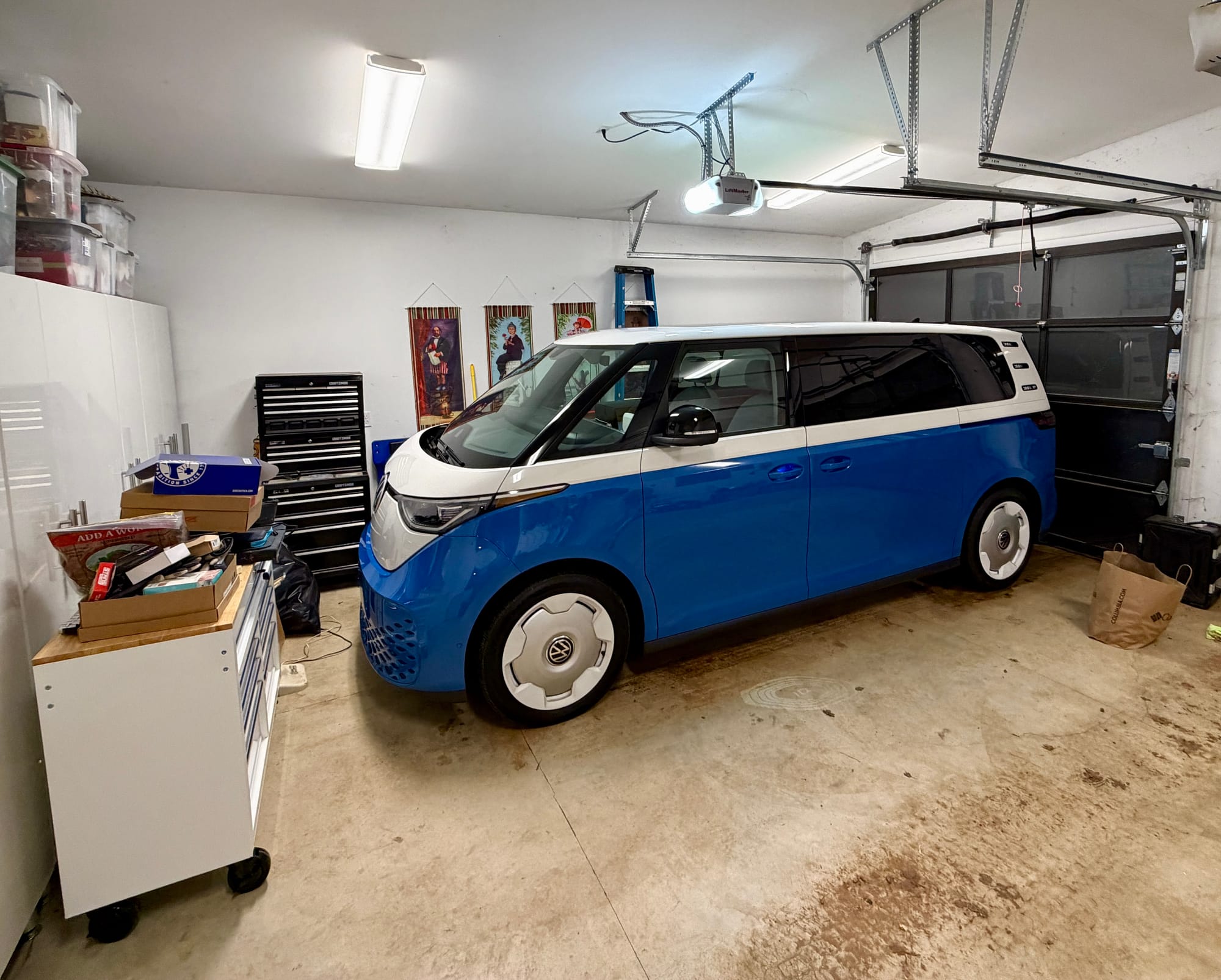
Overall, I'm really happy with the purchase, though I know it's probably due to the newness of it all. In 6-12 months I might write another review post here after I get a lot more experience with it in the real world, but so far, it's been great.

Subscribe to our newsletter.
Be the first to know - subscribe today