Unraveling the weirdness of the Portland Film Exchange building

I spent my first 30 years growing up in California, and the state abounded with great architecture, even though California isn't generally that old of a place. There is the Gamble House in Pasadena, the Case Study houses in Palm Springs, and then all the midcentury modern stuff in Bel Air and Hollywood Hills I'd see back when I worked at UCLA. Santa Barbara's mission style is so strong that every building for miles around looks identical to the next in white stucco, arched doors and windows, and red tile roofs. When I lived in San Francisco, I especially loved the Palace of Fine Arts but I also lived a couple blocks from the Painted Ladies. There's even a few Frank Lloyd Wright buildings dotted around the state.
As I got older and traveled to different parts of the country, I enjoyed seeing things I'd never seen before but were considered common in other places. Stuff like soapstone countertops in New England kitchens that were sourced from local quarries, or how driveways are often paved with oyster shells whenever I was in a coastal fishing town. The first time I went to Austin for SXSW, I loved how every house seemed to have a foundation carved out of local limestone and how great it looked in the Texas sun under every home.
Maybe ten years ago, I was in Seattle and walked past a new house being built, and they were using some veneer stone on the outside that looked like Texas limestone, but it looked weird in the context of Douglas Firs and Western Red Cedars. In a damp, green place, the white stone looked out of place.
Ever since, I'm keen to notice when a building looks like it's from somewhere else. It makes me stop and wonder why someone chose a material that wasn't local or followed a building style from a faraway land.
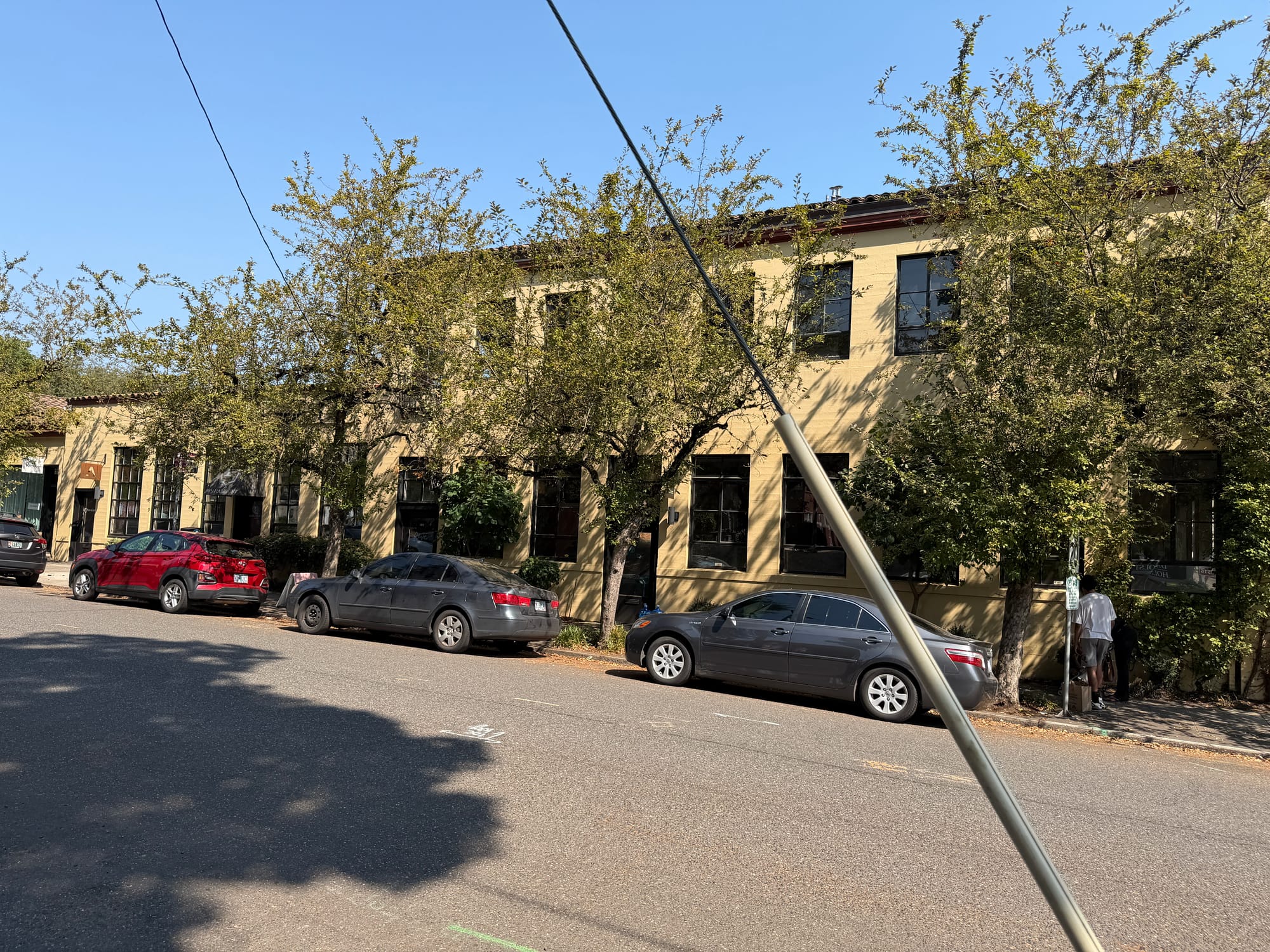

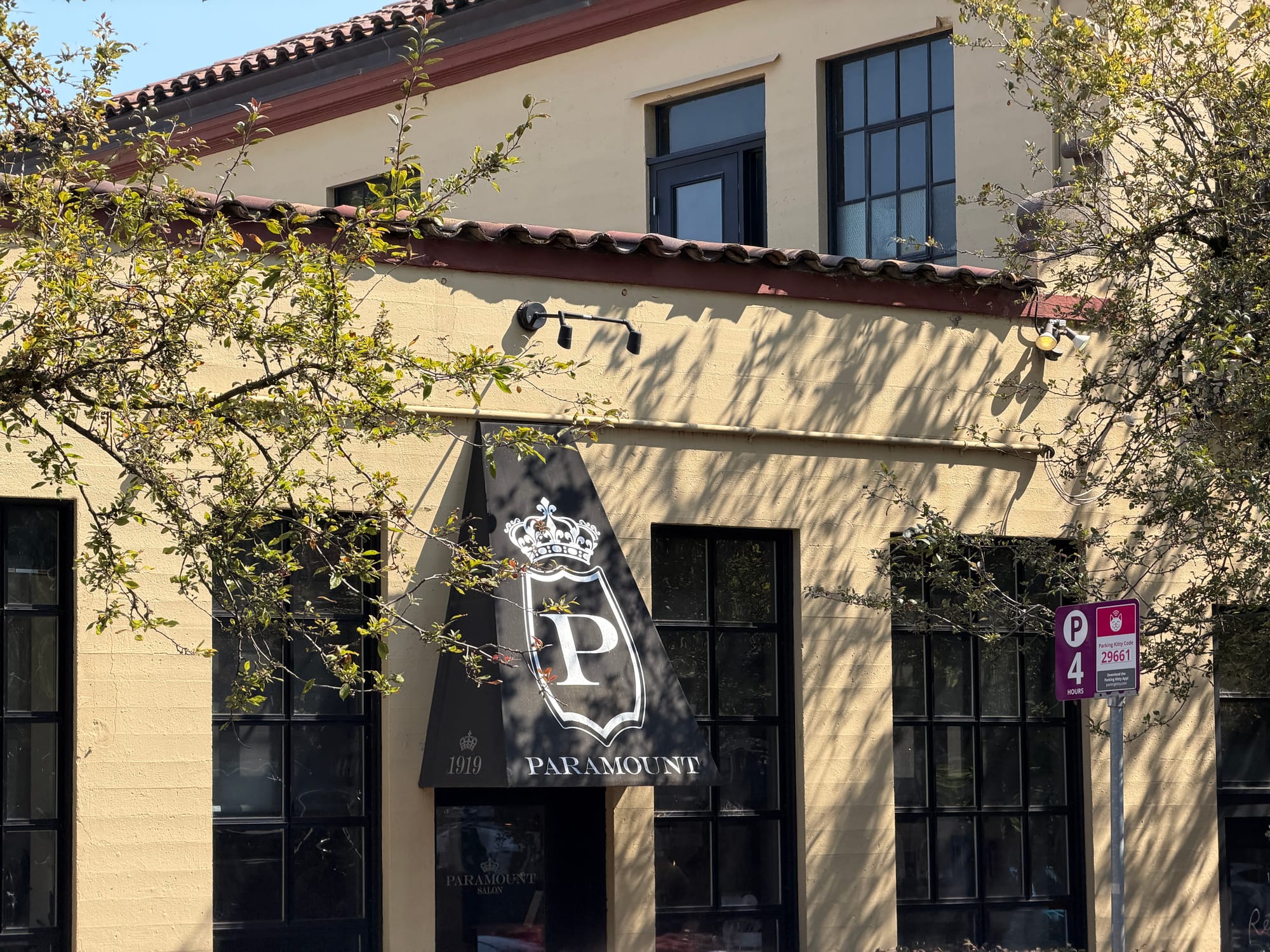
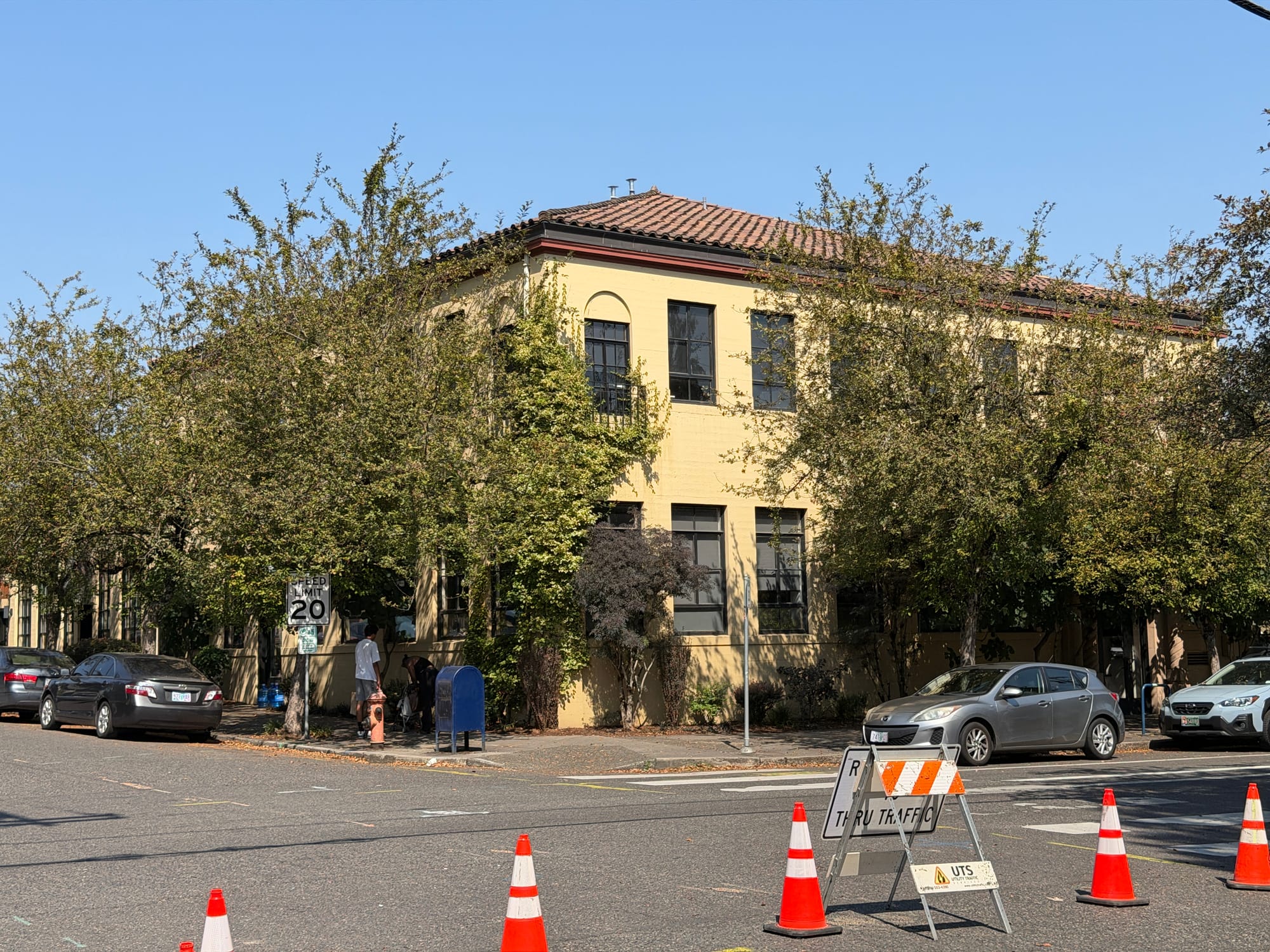
There's a building in Northwest Portland, near 19th and Kearney streets that always looked out of place to me. I dug into my photo archives and I've snapped random shots of it over the past decade, at first because it looked so unusual for Portland.
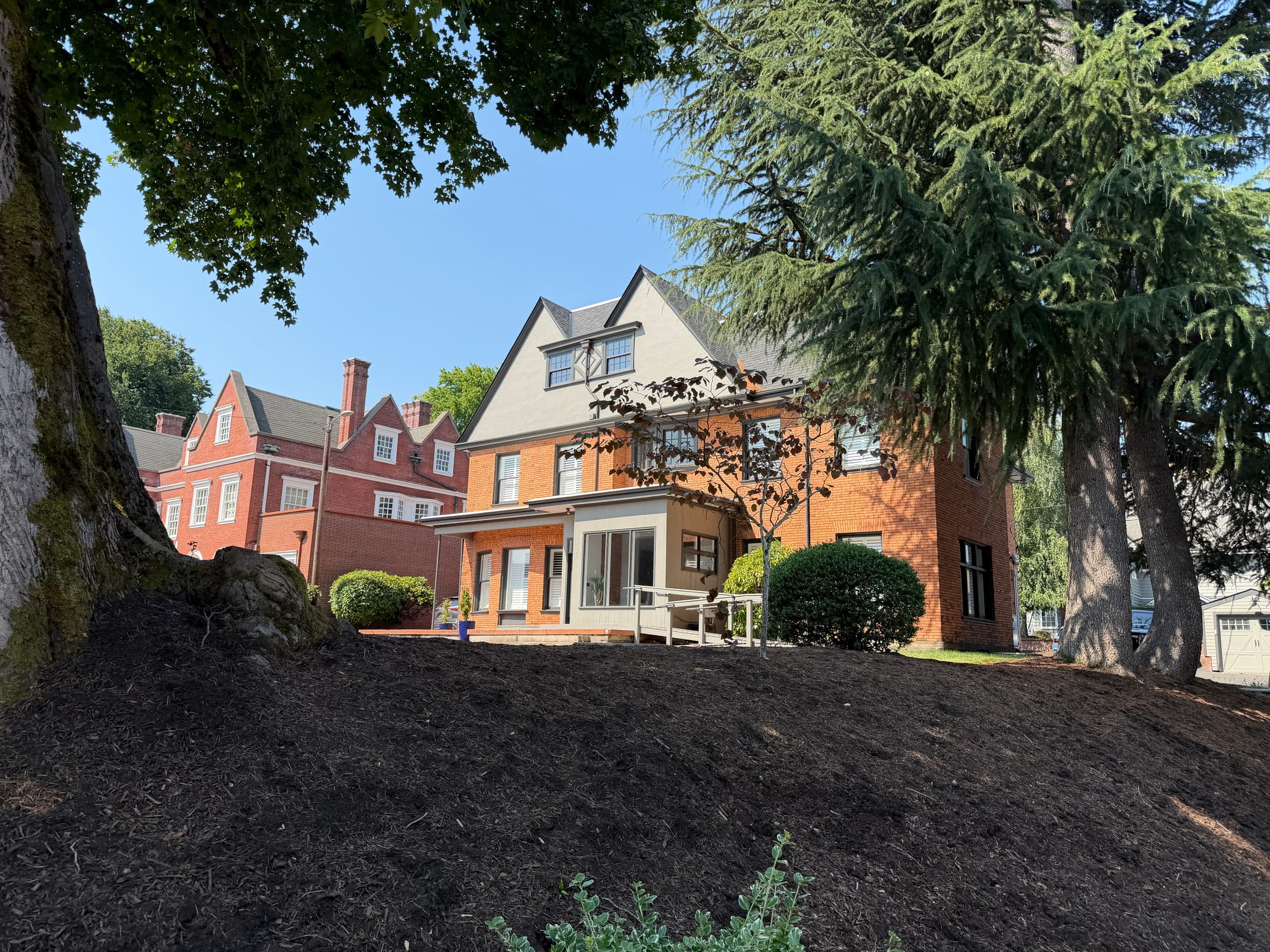
To give you an idea of why the building stuck out, the photo above shows buildings across the street from the odd one. The rest of the neighborhood looks more like a bunch of generic offices you might see on an east coast college campus.
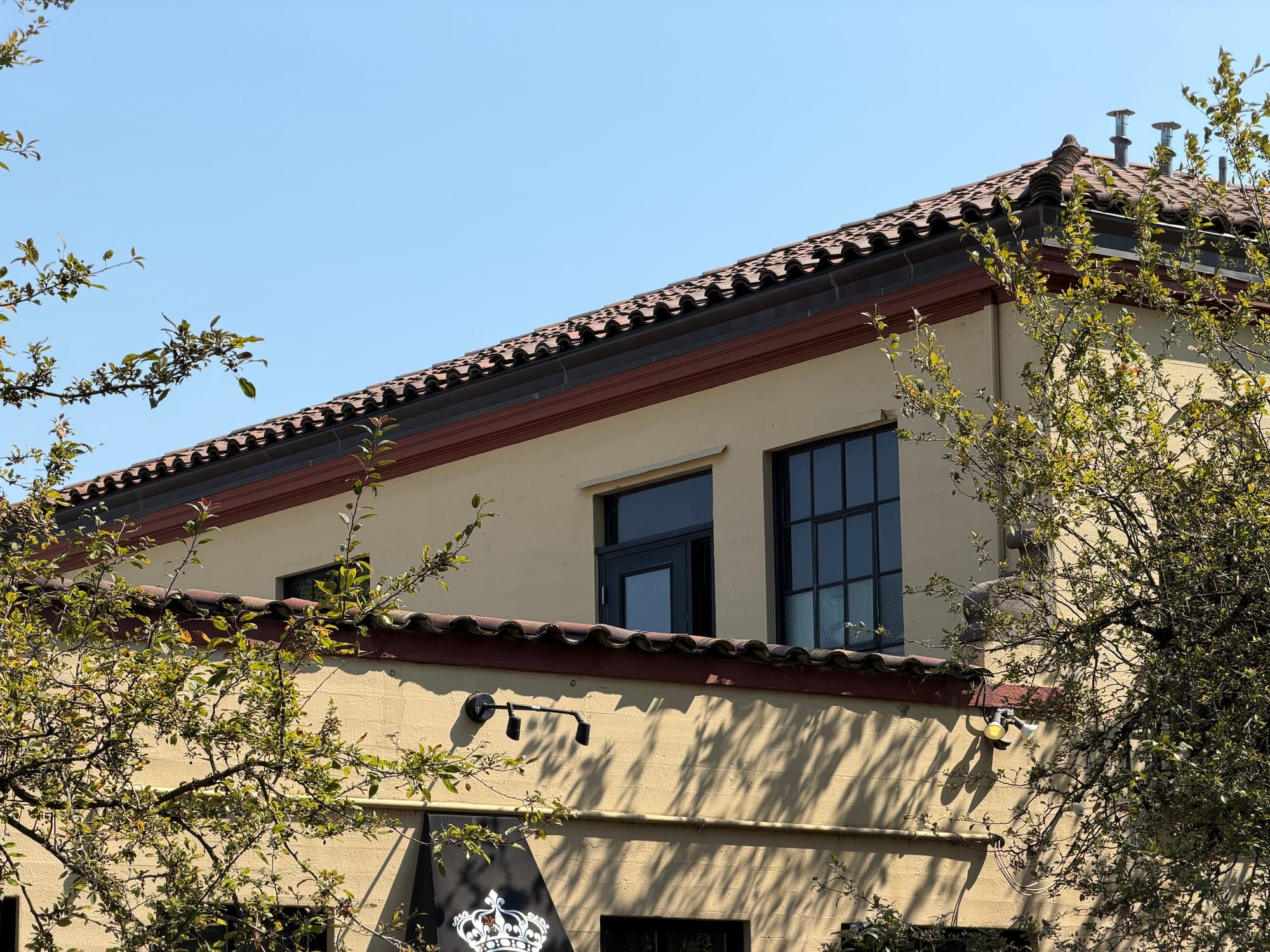
The roof in particular is what stuck out most to me. There are almost zero tile roofs in Oregon, and stuff like stucco or plaster on the outsides of buildings is equally rare. The building looks way more Spanish Colonial Revival than any other place in Portland so it made me wonder: why is this here? What is the story behind it?
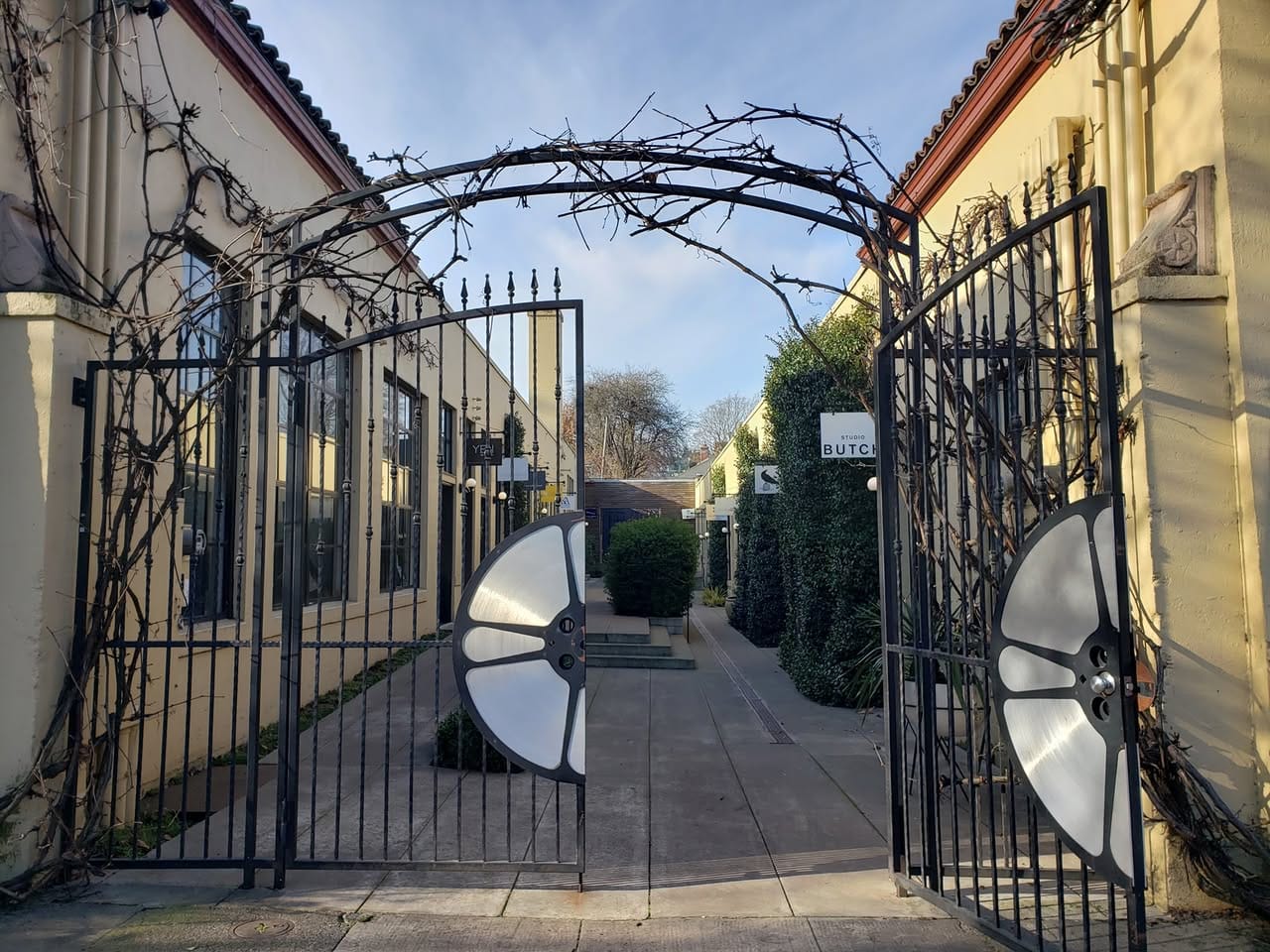
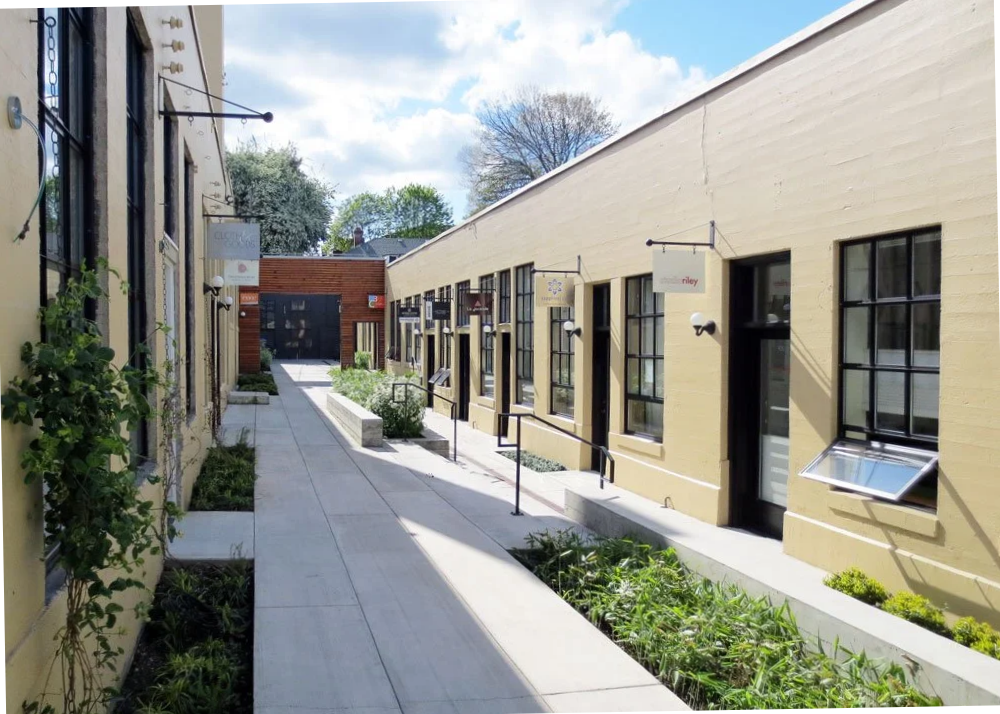
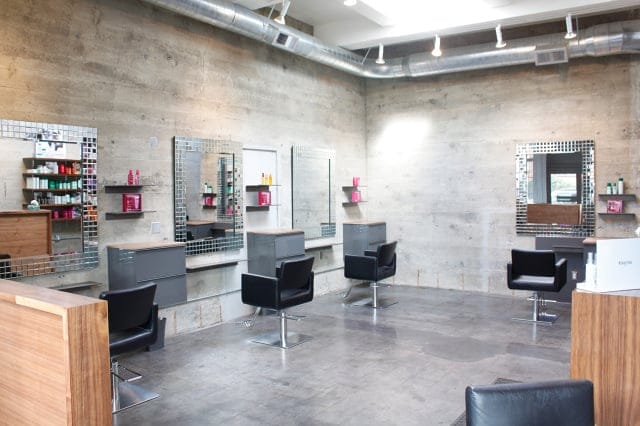

photos swiped from various local shop websites to show the central courtyard and insides of the building
Years ago, I learned some friends worked in the building so I finally got to see the interiors, and it's even more unique on the inside. The inside is industrial, with exposed concrete and vault-like doors in hallways between buildings. Super weird, considering the outside design, right?
Eventually, I got to ask my friend CD, who worked at Rapha when they had an office in the building: What was the deal with this building? Why did it look so out of place for Portland? And what was with all the concrete and brutalism inside, which seemed to have nothing to do with the Spanish-style outsides?
I remember he started with something like "I bet it reminds you of Southern California, right?" Then he told me the whole story of the building.
An architect in LA that worked for the movie studios designed it in the 1930s, and it got built in Portland (maybe that's why it looks like it should be in LA—because it was designed to be in LA by a guy in LA and the studios just built his plans up here?). Originally the building was used for film distribution and storage. Every theater in the Pacific Northwest got their reels from this building and the courtyard on the side that has lots of small storefronts was actually different offices for each film studio. The building has 2-3 foot thick concrete walls to help regulate the temperatures so the film stock was always stable. There were even several giant screening rooms that let them test out the films in a real theater setup (Rapha used to throw watch parties for the Tour de France in theirs).
It was great to finally learn why the building looked the way it did inside and out, and I was fascinated by the story of it and I've told friends that live nearby about it since. A few days ago, I passed it by again, snapped some photos and wondered if the stuff CD told me years ago was really true. After searching around, I found this on a Facebook group that shares obscure local Portland facts:
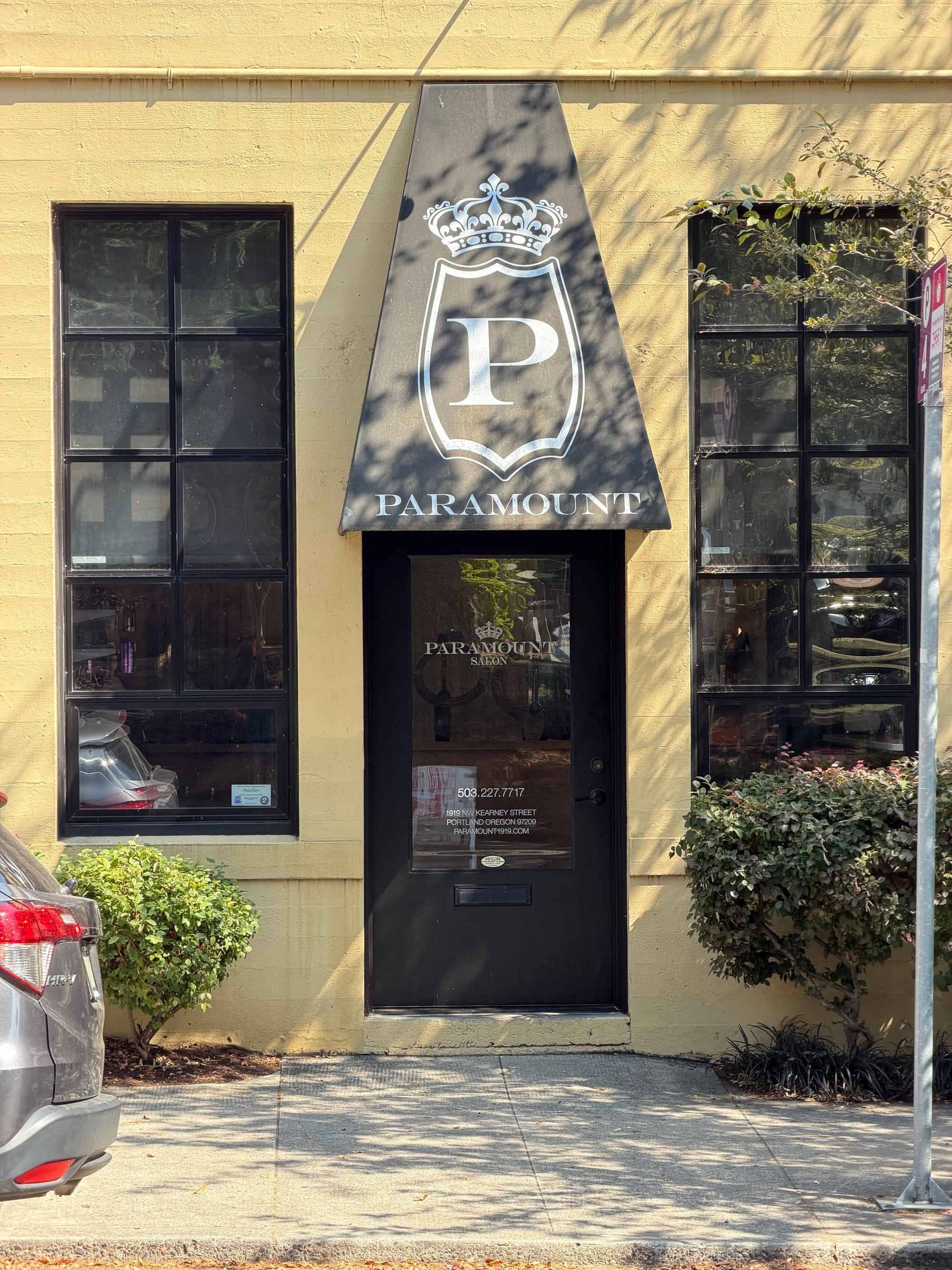
When I walked by the building most recently, my favorite bit was seeing one of the current storefronts is a boutique hair place that's called Paramount Salon.
I'm not sure if their clients know the whole story of why the salon is called that, but I'm glad I finally got to learn why the building looks the way it does.